Q.1.
Mono sodium acetylide reacts with an alkyl halide to form ...[ BHU 1994]
-
8%
a) An alkane
-
50%
b) An alkene
-
33%
c) An unsymmetric higher alkyne
-
8%
d) A symmmetric higher alyne
Q.2.
Which of the following gives propyne on hydrolysis? [ AIIMS 2005]
-
27%
a) Al4C3
-
36%
b) Mg2C3
-
27%
c) B4C
-
9%
d) La4C3
Q.3.
Ethyne can be oxidised to oxalic acid by using ...[ AMU 1998]
-
12%
a) Chromic acid
-
38%
b) Alkaline KMnO4
-
25%
c) Hypochlorous acid
-
25%
d) All reagents
Q.4.
The negative part of the addendum adds on to the unsaturated carbon atom joined to the least number of hydrogen atoms. This statement is called ...[ AFMC 2004]
-
11%
a) Saytzeff rule
-
11%
b) Kharasch effect
-
78%
c) Markownikoff's rule
-
0%
d) Anti-Saytzeff rule
Q.5.
In the reaction of C6H5Y, the major product (> 60%) is m- isomers, so the group Y is ...[ AIIMS 1997]
-
38%
a) -COOH
-
38%
b) -NH2
-
25%
c) -OH
-
0%
d) -Cl
Q.6.
Which one of the following alkenes will react faster with H2 under catalytic hydrogenation condition? [ IIT 2000 ]
-
67%
a)

-
22%
b)

-
11%
c)

-
0%
d)

Q.7.
The ortho/para directing group among the following is ...[ AIIMS 2003]
-
12%
a) COOH
-
0%
b) CN
-
50%
c) COCH3
-
38%
d) NHCOCH3
Q.8.
Benzene can not undergo
-
25%
a) elemeniation
-
25%
b) substitution
-
38%
c) addition
-
12%
d) oxidation
Q.9.
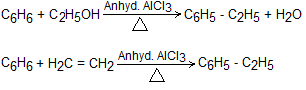
han one correct answer Q220) Using anhydrous AlCl3 as catalyst, which of the following reactions produces ethylbenzene (PhEt)? [ AIPMT 2004]
-
12%
a) CH3CH2OH + C6H6
-
62%
b) CH3CH=CH2 + C6H6
-
25%
c) H2C = CH2 + C6H6.
-
0%
d) H2C = CH2 + C6H6
Explanation
Q.10.
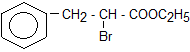
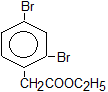
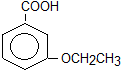
on Q221) In a set of reaction, ethylbenzene yielded a product (D) ..[ AIPMT 2010]

-
25%
a)
-
25%
b)
-
38%
c)
-
12%
d)

Explanation

Q.11.
Which of the following heptanols can be dehydrated to hept-3-ene only ..
-
50%
a) Heptan-3-ol
-
12%
b) Heptan-4-ol
-
38%
c) Heptan-2-ol
-
0%
d) Heptan-1-ol
Q.12.
Which of the following alkenes will give an optically active alcohol when treated with H2O/ H2SO4 [ CPMT 2004]
-
38%
a) 1-Butene
-
12%
b) Ethene
-
12%
c) Propene
-
38%
d) 2-Methyl propene
Explanation

Q.13.
When cyclohexane is poured on water, it floats because ...[ IIT 1997]
-
0%
a) Cyclohexane is in 'boat' form
-
0%
b) Cyclohexane is in 'chair' form
-
12%
c) Cyclohexane is in 'crown' form
-
88%
d) Cyclohexane is less denser than water
Q.14.
Which of the following will decolourise alkaline KMnO4 solution [ IIT 1998]
-
0%
a) C3H8
-
29%
b) CH4
-
14%
c) CCl4
-
57%
d) C2H4
Explanation

Q.15.
oftrhe following statements is/are incorrect
-
0%
a) Bromination of p-nitrotoluene in presence of iron gives 2-bromo-4nitrotoluene
-
25%
b) Sul;phonation of p-tert-butyltolune gives 5-tert-butyl-2-methyl-1-benzenesulphonicacvid
-
25%
c) Nitration of m-xylens gives 2,4-dimethyl-1-nitrobenzene
-
50%
d) Friedel-Crafts reaction of benzene with sec-butyl bromide predominantly gives isobutyl-benzene
Q.16.
Which one of the following compound does not dissolve in conc. H2SO4, even on worming?
-
43%
a) Aniline
-
0%
b) Benzene
-
29%
c) Hexane
-
29%
d) Ethylene
Q.17.
The synthesis of 3-octyne is achived by adding a bromoalkane into a mixture of sodium amide and an alyne. The bromoalkane and lakyne respectively are ... [ IIT 2010]
-
14%
a) BrCH2CH2CH2CH2CH3 and CH3CH2C ≡ CH
-
0%
b) BrCH2CH2CH3 and CH3CH2CH2C≡CH
-
71%
c) BrCH2CH2CH2CH2CH3 and CH3C ≡ CH
-
14%
d) BrCH2CH2CH2CH3 and CH3CH2C≡CH
Explanation

Q.18.
The carbon-carbon bond order in benzene is ...[ BCECE 2008]
-
0%
a) 1
-
33%
b) between 1 and 2
-
44%
c) 1.5
-
22%
d) 2
Q.19.
For preparing an alkane, a concentrated solution of sodium or potassium salt of saturated carboxylic acid is subjected to ...[ MPPMT 1999]
-
38%
a) hydrolysis
-
12%
b) oxidation
-
25%
c) hydrogenation
-
25%
d) electrolysis
Q.20.
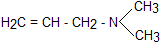
on Q233) Following compound is an ...[DPMT 2007]
-
12%
a) alkyne, 3°amine
-
50%
b) alkene, 2°amine
-
38%
c) alkene, 3°amine
-
0%
d) alkyne, 2°amine
Q.21.
The most suitable catalyst for the hydrogenation of 2-heyne → cis-hexene is
-
25%
a) Pb-BaSO4
-
25%
b) (Ph3P)3RhCl
-
12%
c) 10%Pd-C
-
38%
d) Raney Ni
Q.22.
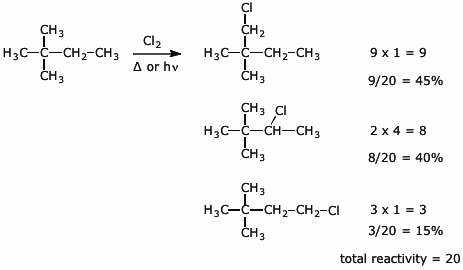
An alkane with a molecular formula. C6H14 reacts with chlorine in the presence of light and heat to give two constitutionally isomeric monochlorides of molecular formula, C6H13Cl. What is the most reasonable starting alkane? [ CET |(J&K) 2011]
-
33%
a) n-Hexane
-
0%
b) 2,2-Dimentylbutane
-
44%
c) 2,3-Dimethylbutane
-
22%
d) 3-Methylpentane
Explanation
Q.23.
on Q236)Among the following compounds, the decreasing order of reactivity towards electrophilic substitutiuon is ...[CBSE PMT 2000 ]


-
50%
a) III > I > II > IV
-
25%
b) IV > I > II > III
-
0%
c) I > II > III > IV
-
25%
d) II > I > III > IV
Q.24.
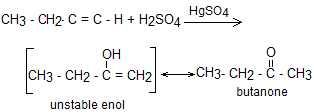
The product(s) obtained via oxymercuration (HgSO4 + H2SO4) of 1-butyne would be ...[ IIT 1999]
-
12%
a) CH3 - CH2 - CO - CH3
-
12%
b) CH3 - CH2 - CH2 - CHO
-
50%
c) CH3 - CH2 - CHO + HCHO
-
25%
d) CH3 - CH2 - COOH + HCOOH
Explanation
Q.25.
The reaction, Benzene + Methyl halide → Tolune in presence of Anhyd. (AlCl3), is kown as .. [ AIIMSS 1998]
-
12%
a) Kolbe reaction
-
12%
b) Wurtz reaction
-
0%
c) Perkin reaction
-
75%
d) Friedel-Craft reaction
Q.26.
What is the decreasing order of strength of bases OH-, NH2-, HC ≡C- and CH3CH2-? [ IIT 1993]
-
12%
a) CH3CH2- > NH2- > HC ≡C- > OH-
-
25%
b) HC≡ C- > CH3CH2- >NH2- > OH-
-
50%
c) OH- > NH2- > HC ≡C-> CH3CH2-
-
12%
d) NH2- > HC ≡ C- > OH- > CH3CH2-
Q.27.
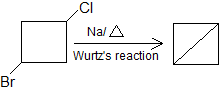
1-bromo-3-chlorocyclobutane when treated with two equivalents of Na, in the presence of ether which of the following will be formed? [ IIT 2005]
-
25%
a)

-
25%
b)

-
25%
c)

-
25%
d)

Explanation
Q.28.
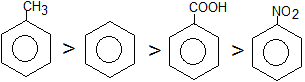
The compound that is most reactive towards electrophilic nitration is ...[ AIPMT 2012]
-
38%
a) toluene
-
0%
b) benzene
-
50%
c) nitrobenzene
-
12%
d) benzoic acid
Explanation
Q.29.
Heating a mixture of sodium benzoate or benzoic acid and soda-lime gives ...[ AFMC 1999]
-
38%
a) Benzene
-
12%
b) Methane
-
38%
c) Sodium benzoate
-
12%
d) Calcium benzoate
Q.30.
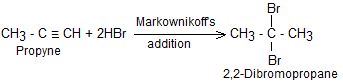
Which of the following reactions will yield 2,2-dibromo-propane? [ CEPMT 2004]
-
22%
a) H2C = CHBr + HBr
-
11%
b) CH3C ≡ CCH3 + 2HBr
-
56%
c) CH3C ≡ CH + 2HBr
-
11%
d) CH3CH = CHBr + HBr
Explanation