Q.1.
Which one of the following compounds would have the highest heat ofhydrogenation? [ JIPMER1998]
-
36%
a) CH2 = CH2
-
27%
b) CH3 - CH2 - CH = CH2
-
9%
c) CH3CH = CHCH3
-
27%
d) (CH3)2C = C(CH3)2
Q.2.
Which of the following compounds can yiled only one monochlorinated product upon free radical chlorination [ PMT Kerala 2011]
-
55%
a) 2,2-Dimethylpropane
-
27%
b) 2-Methylpropane
-
0%
c) 2-Methylbutane
-
18%
d) Propane
Q.3.
The intermediate during the addition of HCl to propene in the presence of peroxide is ... [ IIT 1997]
-
33%
a)

-
58%
b)

-
8%
c)

-
0%
d)

Explanation

Q.4.
In the presence of peroxide, hydrogen chloride and hydrogen iodide do not give anti-Markownikoff's addition to alkeens because ...[ IIT 2001]
-
20%
a) both are highly ionic
-
30%
b) one is oxidising and the other is reducing
-
50%
c) one of the steps is endothermic in both the cases
-
0%
d) all the steps are exothermic in both the cases
Q.5.
In Friedel-Crafts alkylation,besidesAlCl3, the other reactants are...[ CBSE PMT 1999]
-
0%
a) C6H6 + NH3
-
0%
b) C6H6 + CH4
-
91%
c) C6H6 + CH3Cl
-
9%
d) C6H6 + CH3COCl
Q.6.
Anti-markovnikov's addition of HBr is not observed in ... [ IIT 1985]
-
18%
a) Propene
-
9%
b) 1-Butene
-
64%
c) But-2-ene
-
9%
d) Pent-2-ene
Q.7.
Which of the following will be most easily attacked by an electrophile? [ MP PMT 2004]
-
0%
a)

-
17%
b)

-
50%
c)

-
33%
d)

Q.8.
on Q251) Which is a pair of geometrical isomers? [ DPMT 2002]
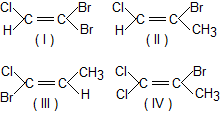
-
40%
a) I and II
-
40%
b) I and III
-
20%
c) II and IV
-
0%
d) III and IV
Q.9.
1-chlorobutane,on reaction with alcoholic potash (KOH) gives ...[ AFMC 1998]
-
42%
a) 1-Butene
-
33%
b) 1-Butanol
-
25%
c) 2-Butene
-
0%
d) 2-Butanol
Q.10.
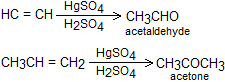
Reaction of acetylene and propylene with HgSO4 in presence of H2SO4 produces respectively ..[ BHU 2006]
-
18%
a) acetone and acetaldehyde
-
55%
b) acetaldehyde and acetone
-
18%
c) propanaldehyde and acetone
-
9%
d) acetone and propanaldehyde
Explanation
Q.11.
The direct iodination of benzene is not possible because
-
8%
a) Iodine is an oxidising agent
-
67%
b) Resulting C6H5I is reduced to C6H6 by HI
-
17%
c) HI is unstable
-
8%
d) The ring gets deactivated
Q.12.
on Q284) Which of the following applies in the reaction (i) CH3CH = CHCH3 (major product) (ii) CH2=CH -CH2CH3(minor product)

-
27%
a) Markovnikov's rule
-
55%
b) Saytzeff's rule
-
18%
c) Kharasch effect
-
0%
d) Hofmann's rule
Q.13.
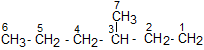
Which of the following isomeric heptanes can yield seven different monochlorinated products upon free radical chlorination ..[ PMT Kerala 2010]
-
18%
a) 2,3-dimethylpentane
-
18%
b) 2,2-dimethylpentane
-
45%
c) 3-methylhexane
-
18%
d) 2-methylhexane
Explanation
Q.14.
Chlorination of an alkane involves the attack of ... [ Pb CET 1990]
-
25%
a) An electrophile
-
25%
b) A nucleophile
-
0%
c) A base
-
50%
d) A free radical
Q.15.
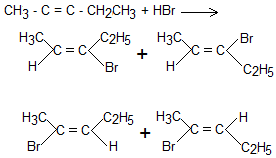
The number of structural and configurational isomers of a bromo compound C5H9Br formed by the addition of HBr to 2-pentyne respectively, are ....[ IIT 1988]
-
11%
a) 1 and 2
-
56%
b) 2 and 4
-
33%
c) 4 and 2
-
0%
d) 2 and 1
Explanation
Q.16.
ropyne on polymerization gives ...[ CPMT 1999]
-
45%
a) Mesitylene
-
9%
b) Propylbenzene
-
18%
c) Ethylbenzene
-
27%
d) Benzene
Q.17.
Which of the following compounds have lowest boiling point? [ CBSE 1994]
-
11%
a) CH3CH2CH2CH2CH3
-
11%
b) CH3CH = CHCH2CH3
-
11%
c) CH3CH = CH - CH - CH = CH2
-
67%
d) CH3CH2CH2CH3
Q.18.
Marsh gas mainly contains ...[ IIT 1980]
-
20%
a) C2H2
-
70%
b) CH4
-
10%
c) H2S
-
0%
d) CO
Q.19.
1-butyne reacts with cold alkaline KMnO4 to produce ...[ AIIMS 1997]
-
20%
a) CH3CH2COOH
-
30%
b) CH3CH2CH2COOH
-
40%
c) CH3CH2COOH +CO2
-
10%
d) CH3CH2COOH + HCOOH
Explanation
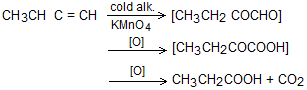
Q.20.
The products obtained viaoxymercuration(HgSO4 + H2SO4)of1-butyne would be ... [ IIT 1998]
-
33%
a) CH3- CH2- CO- CH3
-
33%
b) CH3 - CH2 - CH2 - CHO
-
33%
c) CH3 - CH2 - CHO + HCHO
-
0%
d) CH3CH2COOH + HCOOH
Q.21.
Propan - 1 -ol can be prepared from propene by ...[ AIIMS 2003]
-
22%
a) H2O/H2SO4
-
22%
b) B2H6 follwed by H2O2
-
33%
c) CH3COOH/ H2SO4
-
22%
d) Hg(OAC)2/ H2O followed by NaBH4
Explanation

Q.22.
Ozonolysis of 1,3-dutadenegives ...[Haryana CEET 1999]
-
33%
a) Mixture of an aldehyde and a ketone
-
33%
b) Mixture of an aldehyde and an acid
-
22%
c) only aldehyde
-
11%
d) only ketone
Explanation
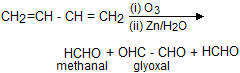
Q.23.
The most reactive hydrocarbon is ...[ JIPMER 2003]
-
12%
a) ethene
-
50%
b) ethyne
-
25%
c) ethane
-
12%
d) methane
Q.24.
Which of the following will have fastest rate of reaction with Br2/FeBr3 [AMU 1997]
-
10%
a)

-
50%
b)

-
20%
c)

-
20%
d)

Q.25.
Which ofthe following compound gives similar products obeying Markovnikov'srule and peroxideeffect? [ Rajasthan PMT1998]
-
12%
a) CH3 - CH = CH2
-
12%
b) CH3CH = CH -CH3
-
62%
c) C2H5-CH = CH - CH3
-
12%
d) C2H5- CH = CH2
Q.26.
on Q268) IDentify X infollowing reaction

-
11%
a)
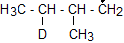
-
33%
b)
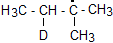
-
33%
c)
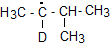
-
22%
d)
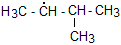
Q.27.
An example of electrophilic substitution reaction is ...[ CBSE PMT 1994]
-
12%
a) Chlorinqation of methane
-
25%
b) Conversion of methyl chloride to methyl alcohol
-
50%
c) Nitration of benzene
-
12%
d) Formation of ethylene from ethyl alcohol
Q.28.
CH3 - CH = CH2 + NOCl → P; Identify the adduct ...[ IIT 2006]
-
22%
a)

-
44%
b)

-
11%
c)

-
22%
d)
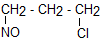
Explanation

Q.29.
The major product formed when 2-bromobutane is treated with alcoholic KOH is ...[ PMT kerala 2010]
-
22%
a) 2-butanol
-
56%
b) trans-2-butene
-
0%
c) 1-butanol
-
22%
d) 1-butene
Explanation
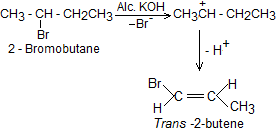
Q.30.
MEthane is formed when ... [ AFMC 1987]
-
11%
a) Sodium acetate is heated with soda lime
-
22%
b) Iodomethane is reduced
-
22%
c) Aluminium carbide reactswwith water
-
44%
d) All of the above