Q.1.
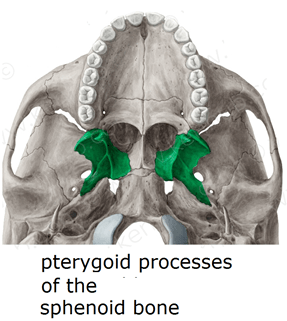
A skull bone is ... ... [ AFMC 2007]
-
20%
a) Atlas
-
20%
b) Pterygoid
-
20%
c) Arytenoid
-
40%
d) Coracoid
Explanation
Q.2.
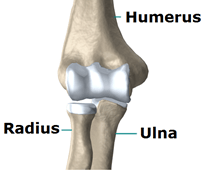
Joint between humerus and radio-ulna is ... ... [ MPPMT 1994]
-
50%
a) Ball and socket
-
25%
b) Pivot
-
0%
c) Gliding
-
25%
d) Hinge
Explanation
Q.3.
We move our hands while walking for ... .... [ AIIMS 2000 ]
-
12%
a) Faster movement
-
62%
b) balancing
-
12%
c) increased blood circulation
-
12%
d) Relieving tension
Q.4.
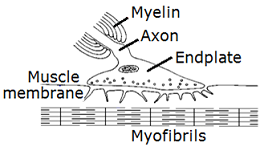
End plate junction is present between ... ...[ CPMT 2010]
-
56%
a) Neuron and striated muscle
-
0%
b) Neuron and neuron
-
0%
c) Muscle and muscle
-
44%
d) Both b and c
Explanation
Q.5.
Number of bone present in human cranium is .... ... [ JKCMEE 2004]
-
67%
a) 8
-
0%
b) 10
-
22%
c) 12
-
11%
d) 16
Q.6.
Joint where synovial capsule and synovial fluid are lacking is ... ....[ EAMCET 2005]
-
0%
a) Carpal - carpal
-
86%
b) Pubic symphysis in females
-
0%
c) Finger and toes in males
-
14%
d) Femur and pelvis in females
Q.7.
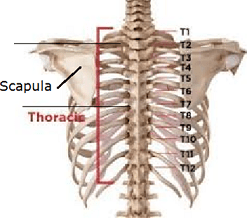
Scapula extends between ... ... [ kerala 2011]
-
25%
a) Second and fifth ribs
-
62%
b) Second and seventh ribs
-
12%
c) third and sixth ribs
-
0%
d) Third and eight ribs
Explanation
Q.8.
Total number of bones found in human skull is ... ... [ AFMC 2001]
-
71%
a) 22
-
29%
b) 29
-
0%
c) 35
-
0%
d) 72
Q.9.
At times ligaments and tendons are overstretched or torn. The phenomenon is ... .... [ Wardha 2003]
-
29%
a) Sprain
-
0%
b) Dislocation
-
71%
c) Fracture
-
0%
d) Tension
Q.10.
Ginglymoid/hinge joint occurs in ... ... [ EAMCET 2002 ]
-
14%
a) Elbow and shoulder
-
57%
b) Elbow and knee
-
0%
c) Atlas and odontoid process
-
29%
d) Knee and ankle
Q.11.
Select the correct statement about disorder of muscular or skeletal system ... .... [ CBSE 2012]
-
0%
a) Muscular dystrophy - Age related shortening of muscles
-
50%
b) Myasthenia gravis - Autoimmune disorder which inhibits sliding of myosin, filaments
-
0%
c) Gout - Inflammation of joints due to extra deposition of calcium
-
50%
d) Osteoporosis - Decrease in bone mass and higher chances of fractures with advancing age
Q.12.
Trochanters occur in ... ... [ CPMT 1994]
-
0%
a) Humerus
-
0%
b) Tibio-fibula
-
50%
c) Femur
-
50%
d) Radio-ulna
Explanation
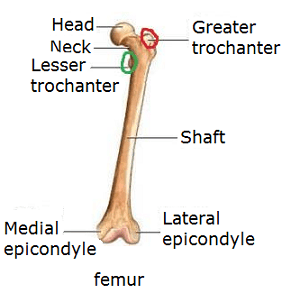
Q.13.
Read the statements regarding muscle proteins ... .. [ kerala 2010] i) Actin is a thin filament and is made up of two F-actins ii) Complex protein, tropomyosin is distributed at regular intervals on troponin iii) Myosin is a thick filament which is also a polymerised protein iv) Globular head of meromyosin consists of heavy meromyosin Of the above statements
-
17%
a) i, ii and iv are correct
-
17%
b) i and iii are correct
-
17%
c) i, ii and iii are correct
-
50%
d) i, iii and iv are correct
Q.14.
Number of bones in cranium, face, hyoid and middle ear are respectively ... .. [ kerala 2007]
-
0%
a) 14, 8, 1 and 3
-
100%
b) 8, 14, 1 and 3
-
0%
c) 3, 8, 14 and 1
-
0%
d) 14, 8, 3 and 1
Q.15.
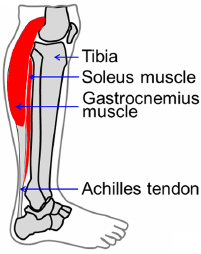
Gastrocnemius muscles are found in .... .... [ RPMT 1996]
-
20%
a) Fore arm
-
40%
b) Chest
-
20%
c) Thigh
-
20%
d) Shank
Explanation
Q.16.
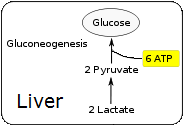
Lactic acid generated during muscle contraction is elaborated to form glycogen in ... .... [ EAMCET 2005]
-
50%
a) Liver
-
0%
b) Pancreas
-
0%
c) Kidney
-
50%
d) Muscle
Explanation
Q.17.
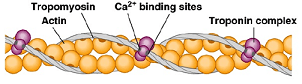
In a resting muscle fibre, tropomyosin partially covers ... ... [ AMU 2010]
-
17%
a) Ca-binding sites on action
-
33%
b) Ca-binding sites on troponin
-
50%
c) Actin binding sites on myosin
-
0%
d) Myosin binding sites on actin
Explanation
Q.18.
The type of muscle present in the alimentary canal is ... ... [ Odisha 2010]
-
100%
a) Smooth muscle fibres
-
0%
b) Striped muscle fibres
-
0%
c) Cardiac muscle fibres
-
0%
d) Both a and b
Q.19.
Which is correct description? ... ... [ CBSE 2010]
-
17%
a) First vertebra is axis which articulates with occipital condyles
-
83%
b) Parietal bone and temporal bone of skull are jointed by fibrous joint
-
0%
c) 9th and 10th pairs of ribs are called floating ribs
-
0%
d) Glenoid cavity is depression to which thigh bone articulates
Q.20.
Joint between metacarpals and phalanges is ... ...[ MHTCET 2003]
-
0%
a) Ball and socket
-
0%
b) Pivot
-
67%
c) Saddle
-
33%
d) Hinge
Explanation
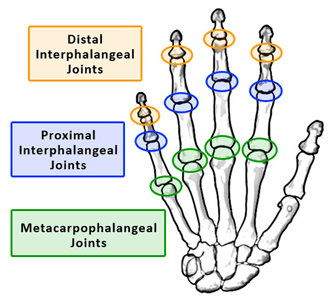
Q.21.
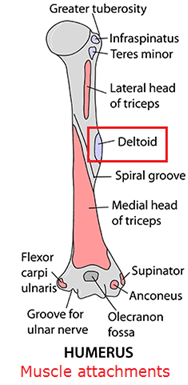
Deltoid ridge of humerus is meant for ... ...
-
20%
a) Articulation
-
60%
b) Attachment of muscles
-
20%
c) Protection
-
0%
d) None of the above
Explanation
Q.22.
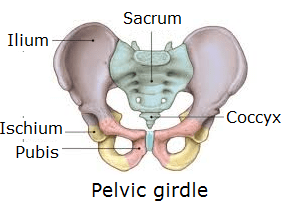
Ilium is part of ... ... [ CET Chd 1997]
-
17%
a) Small intestine
-
0%
b) Pectoral girdle
-
0%
c) Pulmonary tract
-
83%
d) Pelvic girdle
Explanation
Q.23.
Synovial joint occurs in between .... .... [ MPPMT 1992]
-
0%
a) Tail vertebrae
-
100%
b) Humerus and ulna
-
0%
c) Two skull bones
-
0%
d) Two vertebrae
Q.24.
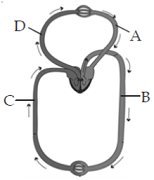
Consider the parts labelled as a, b, c, d and e respectively in the diagram and find out the correct sequence ... ...[ kerala 2006]
-
50%
a) Iliac fossa, Acetabulum, Pubic bone, Ischium, Pubic symphysis
-
25%
b) Pubic bone, Pubic symphysis, Iliac fossa, Acetabulum, , Ischium,
-
25%
c) Iliac fossa, Aceta bulum, , Ischium, Pubic symphysis,Pubic bone
-
0%
d) Ischium, , Pubic symphysis, Iliac fossa, Aceta bulum, Pubic bone
Q.25.
Which is not true for red fibres ... .... [ MPPMT 2011]
-
17%
a) Muscles contain a red coloured oxygen storing pigment
-
33%
b) Muscles contain plenty of mitochondria
-
0%
c) They are also called aerobic muscles
-
50%
d) Amount of sarcoplasmic reticulum is high
Q.26.
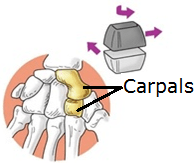
Joints between carpals are ... ... [ HPPMT 2011]
-
0%
a) Fibrous joints
-
0%
b) Cartilaginous joints
-
17%
c) Angular joints
-
83%
d) Gliding joints
Explanation
Q.27.
Red muscle fibres are rich in .... ... [ JIPMER 2002]
-
0%
a) Golgi bodies
-
100%
b) Mitochondria
-
0%
c) Lysosomes
-
0%
d) Ribosomes
Q.28.
What are correct about synovial joint? ... ... [ BHU 2008] Ball and socket jointPivot joint Hinge joint Cartilaginous joint
-
100%
a) 1, 2, 3 correct
-
0%
b) 1, 2 correct
-
0%
c) 2, 4 correct
-
0%
d) 1, 3 correct
Q.29.
All or none law is not applicable for ... ... [ WB 2012]
-
17%
a) Single skeletal muscle fibre
-
0%
b) Whole skeletal muscle
-
83%
c) Single smooth muscle fibre
-
0%
d) Whole cardiac muscle
Q.30.
Stimulus several times greater than threshold stimulus is provided to muscle fibre. It will .... .... [ AIIMS 200 ]
-
14%
a) Contract with same force
-
29%
b) Contract forcefully
-
14%
c) Contract slightly
-
43%
d) Undergo tetany