Q.1.
he molecule MLx is planar with six pairs of electrons around M in the valence shell. the value of x is
-
20%
a) 6
-
40%
b) 2
-
40%
c) 4
-
0%
d) 3
Q.2.
Which of the following has highest dipole moment
-
67%
a)H2O
-
33%
b) CO2
-
0%
c)CCl4
-
0%
d)BF3
Q.3.
Pair of species having similar shape is
-
25%
a) PCl3 , NH3
-
0%
b) CF4, SF4
-
50%
c)PbCl2, CO2
-
25%
d)PF5, IF5
Q.4.
Which of the following compound is non polar
-
0%
a) CH3Cl
-
33%
b) CH2Cl2
-
33%
c) CHCl3
-
33%
d) CCl4
Q.5.
In which of the following species the angle around the central atom is exactly equal to 109°28'
-
0%
a) SF4
-
0%
b) NH3
-
50%
c) NH4+
-
50%
d) None of above
Q.6.
hape of ClF3 molecule is
-
67%
a)Triangular planar
-
0%
b) Pyramidal
-
0%
c)T shape
-
33%
d)Trigonal bipyramidal
Q.7.
Which of the following gaseous molecules is polar
-
0%
a) CS2
-
0%
b) BF3
-
100%
c)SnCl2
-
0%
d)PbCl4
Q.8.
Which of the following has smallest bond length
-
0%
a) O2
-
0%
b) N2
-
50%
c)Cl2
-
50%
d)HCl
Q.9.
A σ bond molecule MX3 is T-shaped. the number of non-bonding pairs of electrons is
-
0%
a) 0
-
50%
b) 2
-
0%
c) 1
-
50%
d) can be predicted only if aromatic number of M is known
Q.10.
Which of the following have zero dipole moment
-
0%
a)Benzene
-
0%
b) Naphthalene
-
33%
c)P-Dichlorobenzene
-
67%
d)All the these
Q.11.
The molecule that does not posses a permanent dipole moment is
-
0%
a) NF3
-
0%
b) BF3
-
33%
c)CH2 Cl2
-
67%
d)NO2
Explanation
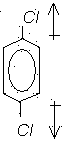
Q.12.
Which one of the following is a compound most likely to have a dipole moment
-
0%
a) CS2
-
0%
b) CCl2F2
-
100%
c)SO3
-
0%
d)SnCl4
Q.13.
Which of the following accounts for the bond angle of 104.5° around O in water molecule?
-
33%
a) lp-bp repulsions
-
33%
b) Lower ionization energy
-
0%
c) Higher electron affinity of oxygen
-
33%
d) small size of O and H atoms
Q.14.
The shape of SF4 molecule is
-
0%
a)square planar
-
33%
b) trigonal bipyramidal
-
0%
c)Pyramidal
-
67%
d)Distorted tetrahedron / see saw
Q.15.
Which of the following bonds have lower bond energy
-
25%
a) C - C
-
0%
b) N - N
-
25%
c)H - H
-
50%
d)O - O
Q.16.
Which of the following combination is not allowed in the LCAO method for the formation of MO ( consider the Z-axis as the molecular axis)?
-
0%
a) s + pz
-
33%
b) s + px
-
67%
c)px + px
-
0%
d)pz + pz
Q.17.
A molecule XY2 contains two σ bond and two π bond and one lone pair of electron in the valence shell of X. The arrangement of lon pair as well as bond pairs is
-
0%
a) square pyramidal
-
25%
b) linear
-
25%
c)trigonal planar
-
50%
d)unpredictable
Q.18.
A molecule has seven bond pairs around the central atom, the shape associated with the molecule is
-
0%
a) heptagonal
-
25%
b) octahedral
-
0%
c) pentagonal pyramidal
-
75%
d) pentagonal bipyramidal
Q.19.
A molecule has seven bond pairs around the central atom, the shape associated with the molecule is
-
25%
a) heptagonal
-
0%
b) octahedral
-
0%
c) pentagonal pyramidal
-
75%
d) pentagonal bipyramidal
Q.20.
Which of the following molecules has non-zero dipole moment
-
0%
a) PCl5
-
50%
b) BF3
-
0%
c)SO2
-
50%
d)CO2
Q.21.
Which of the following has a largest bond angle
-
0%
a) H2O
-
0%
b) F2O
-
67%
c)Cl2O
-
33%
d)H2S
Q.22.
The correct order of the bond angles is
-
0%
a) NH3 > H2O > PH3 > H2S
-
33%
b) NH3 > PH3 > H2O > H2S
-
33%
c) NH3 > H2S > PH3 >H2O
-
33%
d) PH3 > H2S > NH3 > H2O
Q.23.
The correct increasing bond angle among BF3, PF3 and ClF3 follows the order
-
50%
a) BF3 < PF3 < ClF3
-
50%
b) PF3 < BF3 < ClF3
-
0%
c)ClF3 < PF3 < BF3
-
0%
d)ClF3=PF3=BF3
Q.24.
Which of the following molecules have highest dipole moment?
-
0%
a) BF3
-
33%
b) NH3
-
33%
c)NF3
-
33%
d)B2H6
Q.25.
The correct order of bond angle is
-
0%
a) NO2- > NO2+ > NO2
-
0%
b)NO2+ > NO2- > NO2
-
33%
c)NO2 > NO2+ >NO2-
-
67%
d)NO2+ > NO2 > NO2-
Q.26.
Which out of the following structures is expected to have three bond pairs and one lone pair
-
0%
a) Tetra hedral
-
33%
b) Octa hedral
-
33%
c) Trigonal planar
-
33%
d) Pyramidal
Q.27.
Which of the following molecules has a higher dipole moment
-
0%
a)CO2
-
25%
b) CCl4
-
50%
c)NH3
-
25%
d)BF3
Q.28.
Which of the following set contains species having same angle around the central atom
-
0%
a) SF4, CH4, NH4
-
50%
b) NF3, BCl3, NH3
-
0%
c)BF3, NF3, AlCl3
-
50%
d)BF3, BCl3, BBr3
Q.29.
The bond angles of NH3, NH4+ and NH2- are in order
-
0%
a) NH2- > NH3 > NH4+
-
0%
b)NH4+ > NH3 > NH2-
-
67%
c)NH3 > NH2- > NH4+
-
33%
d)NH3 > NH4+ >NH2-
Q.30.
he bond angle if H2O molecule is less than that of NH>3 molecule because
-
33%
a) The hybridisation of O in H2O and N in NH3 is different
-
0%
b) The atomic radii of N and O are different
-
33%
c) There is one lone pair of electrons on O and two loan pairs of electrons on O
-
33%
d) There are two lone pairs of electrons on O and one loan pair of electrons on N