Q.1.
The cell membranes of the adjacent cells are fused at the cell junction. [ AMU 2010]
-
29%
a) macula adherens
-
36%
b) Zonula occludens
-
21%
c) Zonula adherens
-
14%
d) Nexus
Q.2.
The term plastid was coined by ... ... [ CET Chd. 2003 ]
-
44%
a) Haeckel
-
56%
b) Strasburger
-
0%
c) Virchow
-
0%
d) Flemming
Q.3.
Nucleolus takes part in synthesis of ... ... [ RPMT 1994 ]
-
60%
a) rRNA
-
0%
b) tRNA
-
20%
c) mRNA
-
20%
d) DNA
Q.4.
Oxidative electron transport occurs in ... ... [ Pb PMT 1998 ]
-
8%
a) Chloroplast
-
17%
b) Outer membrane of mitochondria
-
50%
c) Cristae
-
25%
d) Endoplasmic reticulum
Q.5.
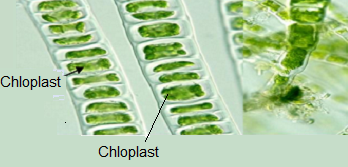
In Ulothrix, the shape of chloroplast is .. ..... [ AMU 2005 ]
-
9%
a) Star - shaped
-
36%
b) Cup -shaped
-
36%
c) Girdle -shaped
-
18%
d) Diffused type
Explanation
Q.6.
Protoplasm forms percentage of total weight of the body ... ... {AMU 1999 ]
-
0%
a) 45%
-
56%
b) 70%
-
33%
c) 95%
-
11%
d) 15%
Q.7.
Polymorphic cell organelle is ... .. [ MPPMT 1997 ]
-
38%
a) Glyoxysome
-
12%
b) Peroxisome
-
38%
c) Lysosome
-
12%
d) Golgi complex
Q.8.
rRNA occurs in ... ... [ MHT CET 2008 ]
-
12%
a) Lysosomes
-
0%
b) Cytosol
-
75%
c) Ribosomes
-
12%
d) Golgi apparatus
Q.9.
Which is common in plant and animal cells
-
11%
a) Plastids
-
11%
b) Centrioles
-
67%
c) Mitochondria
-
11%
d) Central vacuole
Q.10.
Which ones have round and biconcave shape ... ... [ kerala 2011 ]
-
11%
a) White blood cells
-
67%
b) Red blood cells
-
11%
c) Columnar epithelial cells
-
11%
d) Nerve cells
Q.11.
Protein synthesis occur in an animal cell in ... .. [ JIPMER1997 ]
-
12%
a) Cytoplasm
-
25%
b) Cytoplasm as well as mitochondria
-
50%
c) Ribosomes attached to nuclear envelope
-
12%
d) Nucleolus as well as cytoplasm
Q.12.
Which of the following is seen only in prokaryotic cell... ... [ kerala 2012 ]
-
0%
a) Dictyosome
-
62%
b) Ribosome
-
38%
c) Mesosome
-
0%
d) ER
Q.13.
Colour of Rose petals is due to water soluble pigment present in .. ... [ AMU 1998 ]
-
29%
a) Cytoplasm
-
14%
b) Intercellular spaces
-
14%
c) Nucleus
-
43%
d) Vacuoles
Q.14.
Which of the following statement about cilia is not correct? ... .. [ CBSE 2006 ]
-
22%
a) Organised beating of cilia is controlled by fluxes of Ca2+ across the membrane
-
22%
b) Cilia are hair-like cellular appendages
-
44%
c) Cilia contain an outer ring of nine doublet microtubules surrounding two singlet microtubules
-
11%
d) Microtubules of cilia are composed of tubulin
Q.15.
E.R. of rapid dividing cells is .... ... [ AMU 1998 ]
-
25%
a) Non-functional
-
25%
b) Poorly developed
-
25%
c) Absent
-
25%
d) Highly developed
Q.16.
A thoroughly washed beet root slice kept in water at room temperature does not lose anthocyanin pigment because plasma membrane is ... ... [ CET Chd2002]
-
0%
a) Permeable to anthocyanin
-
50%
b) impermeable to anthocyanin
-
50%
c) Selectively permeable to anthocyanin
-
0%
d) Dead
Q.17.
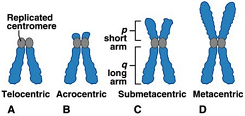
A chromosome with centromere in the middle is ... ... [ Odisha 2007 ]
-
38%
a) Metacentric
-
12%
b) Telocentric
-
50%
c) Acrocentric
-
0%
d) Dicentric
Explanation
Q.18.
Smaller cells have ... ... [ DPMT 2011 ]
-
33%
a) Small surface area per volume ratio
-
33%
b) Large surface area per volume ratio
-
22%
c) Slow exchange rate of nutrients
-
11%
d) None of the above
Q.19.
Average diameter of plastids is ... ... [ Odisha 2003 ]
-
0%
a) 0.2 - 1.0 mm
-
67%
b) 0.2 - 1.0 µm
-
33%
c) 0.2 - 1.0 nm
-
0%
d) 0.2 - 1.0 Å
Q.20.
Rackr's/ Fernandez-Moran particles are found in ... ... [ Odisha 2012 ]
-
0%
a) Golgi bodies
-
29%
b) Chromosomes
-
71%
c) Mitochondria
-
0%
d) Nucleus
Q.21.
Chloroplasts of algae lack ... ... [ AMU 1998 ]
-
29%
a) Quantasomes
-
14%
b) Lamellae
-
43%
c) Pigments
-
14%
d) Grana
Q.22.
Number of microtubules in a flagellum including those sharing three protofilaments with each other is .... .... [ CPMT 2010 ]
-
17%
a) 10
-
83%
b) 11
-
0%
c) 20
-
0%
d) 22
Q.23.
Series of reaction which can convert fatty acids to sugars in plant but not in animals is .... [ CBSE 1994 ]
-
17%
a) Krebs cycle
-
17%
b) Glyoxylate cycle
-
50%
c) Ornithine cycle
-
17%
d) Glycolysis
Q.24.
Chemical used most by plants is ... ... [ DPMT 1998 ]
-
33%
a) Carbon dioxide
-
17%
b) Oxygen
-
17%
c) Cytochrome
-
33%
d) Nitrogen
Q.25.
New cells generate from .. .... [ HPPMT 2010 ]
-
17%
a) Bacterial fermentation
-
17%
b) Regeneration of old cells
-
67%
c) Pre-existing cells
-
0%
d) Abiotic material
Q.26.
Which is not part of endomembrane system .... ... [ CBSE 2011 ]
-
17%
a) Golgi body
-
33%
b) Vacuole
-
50%
c) Peroxisome
-
0%
d) Lysosome
Q.27.
Middle lamella is mainly composed of ... ... [ Odisha 2011]
-
20%
a) Hemicellulose
-
40%
b) Calcium pectate
-
40%
c) Muramic acid
-
0%
d) Phosphoglycerides
Q.28.
Mitochondria are absent in ... ... [ AMU 1998 ]
-
60%
a) Bacteria
-
0%
b) Red algae
-
20%
c) Green algae
-
20%
d) Brown algae
Q.29.
Cell organelle taking part in photorespiration is ... ... [ AIIMS 1991 ]
-
17%
a) Glyoxysome
-
50%
b) Peroxisome
-
0%
c) Dictyosome
-
33%
d) E.R.
Q.30.
Which is common between chloroplasts, chromoplasts and leucoplasts? [ AIIMS 2006 ]
-
17%
a) Presence of pigments
-
0%
b) Presence of thylakoids and grana
-
33%
c) Storage of starch, proteins and lipids
-
50%
d) Ability to multiply by a fission-like process
Q.31.
Lysosomes are formed from ... ... [ BHU 2007 ]
-
17%
a) E.R.
-
50%
b) Golgi bodies
-
17%
c) Mitochondria
-
17%
d) Both A and B
Q.32.
Phagocytosis was first seen by ... ... [ BHU 1995 ]
-
0%
a) Huxley
-
29%
b) Straburger
-
14%
c) Haeckel
-
57%
d) Metchnikoff
Q.33.
Pectin occurs in ... .. [ manipal 2005 ]
-
0%
a) Blood proteins
-
50%
b) Plant cell walls
-
12%
c) Milk protein
-
38%
d) Liver cells
Q.34.
Eukaryotic ribosomes are ... ... [ kerala 2002 ]
-
0%
a) 30 S
-
17%
b) 50 S
-
83%
c) 80 S
-
0%
d) 70 S
Q.35.
Which one is an organelle within an organelle .... ... [ CBSE 2012 ]
-
0%
a) ER
-
20%
b) Mesosome
-
40%
c) Peroxisome
-
40%
d) Ribosome
Q.36.
According to cell theory ... ... [ BHU 1999 ]
-
60%
a) Cells are fundamental structural units of organisms
-
20%
b) Cells reproduce
-
20%
c) Cell are living
-
0%
d) Cell have nuclei
Q.37.
Detoxification site in liver is ... ... [ DPMT 1997]
-
20%
a) Free ribosomes
-
60%
b) Golgi complex
-
20%
c) SER
-
0%
d) RER
Q.38.
Choose the wrong statement regarding bacterial cell A) Glycocalyx is the outer most envelope in bacteria B) Glycocalyx could be a loose sheath called capsule C) Glycocalyx may be thick and tough called slime layer D) A special structure formed by the plasma membrane is called mesosome E) Small bristle-like fibres sprouting out of the cell are called fimbriae ... ... [ kerala 2012 ]
-
20%
a) A and C are wrong
-
20%
b) A and B are wrong
-
60%
c) B and C are wrong
-
0%
d) A and D are wrong
Q.39.
Which one is common amongst nucleus chloroplast and mitochondria? ... ... [ BHU 1990 ]
-
0%
a) Cristae
-
25%
b) Thylakoids
-
75%
c) Nucleic acid
-
0%
d) Carbohydrate metabolism
Q.40.
Streaming of cytoplasm within a living cell is ... ... [ CET Chd 2011 ]
-
0%
a) Homoeostasis
-
25%
b) Cyclosis
-
50%
c) Diffusion
-
25%
d) Osmoregulation
Q.41.
Polytene chromosomes occur in cells of salivary glands of ... ... [ JIPMER 1998 ]
-
50%
a) Some insects
-
25%
b) Rabbit
-
0%
c) Humans
-
25%
d) Mice
Q.42.
F1 particles occur in ... .... [ Odisha 2004 ]
-
50%
a) Mitochondria
-
0%
b) Chloroplasts
-
50%
c) Ribosomes
-
0%
d) Rough endoplasmic reticulum
Q.43.
Who first saw and described a live cell.. .... [ HPPMT 2010 ]
-
25%
a) Matthias Schleiden
-
50%
b) Theodore Schwann
-
25%
c) Anton von Leeuwenhoek
-
0%
d) Rudolf Virchow
Q.44.
Plasmodesmata are .... ... [ CBSE 2009 ]
-
0%
a) Locomotory structures
-
50%
b) Lignified cement between cells
-
50%
c) Connection between adjacent cells
-
0%
d) Membranes connecting nucleus and plasmalemma
Q.45.
Which one is non-living cell inclusion? [ Odisha 1997 ]
-
0%
a) Golgi complex
-
33%
b) Centrosome
-
67%
c) Vacuole
-
0%
d) Ribosome
Q.46.
Function of lysosome is ... ... [ MPPMT 2002 ]
-
33%
a) Breakdown of cell substances
-
0%
b) Synthesis of proteins
-
67%
c) Photosynthesis
-
0%
d) Breakdown of water
Q.47.
Cuticle occurs over ... ... [ Odisha 2007 ]
-
0%
a) Virus
-
50%
b) Human cell
-
50%
c) Plant cell
-
0%
d) Bacterium
Q.48.
Water soluble materials pass through .... .. [ Kerala 2003 ]
-
25%
a) Extrinsic proteins
-
50%
b) Channel proteins
-
25%
c) Spectrin
-
0%
d) Glycoprotein
Q.49.
Cytoskeleton is made of ... .. [ DPMT 1997 ]
-
0%
a) Microtubules and E.R.
-
33%
b) Microtubules and microfilaments
-
33%
c) Cytoplasm
-
33%
d) Cytoplasm with network of microtubules and microfilaments
Q.50.
Which statement is not correct with reference to mitochondria? [ KCET 2009 ]
-
33%
a) They divide in synchrony with cell cycle.
-
67%
b) They contain DNA
-
0%
c) They contain cristae
-
0%
d) They provide chemical energy