Q.1.
Which fruit is a type of nut?
-
25%
a) Ground nut
-
31%
b) Oat
-
31%
c) Walnut
-
12%
d) Cashew nut
Q.2.
Individual components of Perianth are called:
-
0%
a) Sepals
-
15%
b) Petals
-
54%
c) Tepals
-
31%
d) Brackets
Q.3.
Find the incorrect match.
-
73%
a) Stilt root - turnip
-
9%
b) Tap root - carrot
-
0%
c) Adventitious root - sweet potato
-
18%
d) Prop root- banyan tree
Q.4.
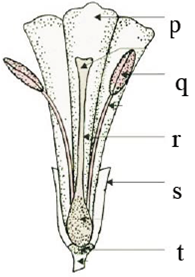
Name the labelled flower part.
-
33%
a) P-peduncle, q-ovary r-stigma, s-calyx, t-thalamus
-
33%
b) P-corolla, q-anther, r-stigma, s-calyx, t- peduncle
-
33%
c) P-petals, q-style, r-stigma, s-stamen, t- ovary
-
0%
d) P- corolla, q- anther , r-style, s-calyx t- thalamus
Q.5.
S: The loranthus plant possess nodules on their root system R: Rhizobium bacteria live in root nodules
-
20%
a) S and R both are true, where R is definition of S
-
40%
b) S and R both are true, where R is not reason of S
-
0%
c) S is true, R is false
-
40%
d) S is false , R is true
Q.6.
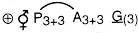
ssign the floral formula to the respective plant:
-
50%
a) Pisum sativum.
-
17%
b) Brassica.
-
33%
c) Solanum nigrum.
-
0%
d) Allium cepa.
Q.7.
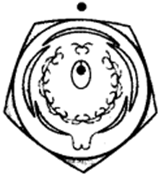
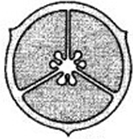
Choose the correct description of the flower depicted in the floral diagram given below:
-
0%
a) United, Valvate sepals, free, imbricate aestivation, free stamens, unilocular ovary with axile placentation.
-
50%
b) United, Valvate sepals, free, twisted aestivation, free stamens, unilocular ovary with marginal placentation.
-
0%
c) United, Valvate sepals, free, imbricate aestivation, free stamens, unilocular ovary with marginal placentation.
-
50%
d) United, Valvate sepals, free, imbricate aestivation, epipetalous stamens, unilocular ovary with marginal placentation.
Q.8.
Identify the type of placentation and select the wring statement regarding this:
-
20%
a) The figure shows axile placentation.
-
40%
b) This type of placentation is a characteristic feature of family Lilliaceae.
-
20%
c) Dianthus and Primrose are the two examples of this type of placentation.
-
20%
d) In this the ovules are attached to the placenta in a multilocular ovary.
Q.9.
The ovary is half inferior in flowers of : (A.I.P.M.T. 2011)
-
75%
a) Peach
-
0%
b) Cucumber
-
0%
c) Cotton
-
25%
d) Guava
Q.10.
A characteristic of angiosperm is : (AFMC 1992,Hariyana,PMT, 1994)
-
25%
a) Flower
-
0%
b) Root
-
0%
c) Seed
-
75%
d) All of these
Q.11.
Seed is :
-
0%
a) Fertilized embryo
-
0%
b) Fertilized ovary
-
33%
c) Fertilized fruit
-
67%
d) Fertilized ovule
Q.12.
Select the correct pair
| (P) Onion | (I) tubers |
| (Q) pea | (ii)phylloclade |
| (R) Potato | (iii) tunicated bulb |
| (S) muehlenbeckia | (iv)foliaceous stipules |
-
67%
a) P = iii ; Q = iv ; R = ii ; S = i
-
0%
b) P = iv ; Q = iii ; R = ii ; S = i
-
0%
c) P = iii ; Q = i ; R = iv ; S = ii
-
33%
d) P = iii ; Q = iv ; R = i ; S = ii
Q.13.
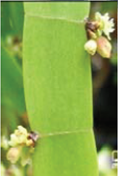
Which plant is this and live in _______ habitat.
-
0%
a) Opuntia , ever green
-
50%
b) Muehlenbevkia, dry
-
0%
c) Dioscorea , thorn forest
-
50%
d) Agave , desert
Q.14.
S: Gloriosa superba is a scientific name of vachhnag R: vachhange having reticulate venation
-
0%
a) S and R both are true, where R is definition of S
-
50%
b) S and R both are true, where R is not reason of S
-
50%
c) S is true, R is false
-
0%
d) S is false , R is true
Q.15.
Ovary is half – inferior in the flower of:
-
0%
a) Apple.
-
0%
b) Brinjal.
-
100%
c) Peach.
-
0%
d) Cucumber.
Q.16.
The following floral formula represents
-
0%
a) Solanum nigrum
-
50%
b) Hibiscus rosa-sinensis
-
50%
c) Citrus aurantum
-
0%
d) Brassica campestirs
Q.17.
Which of the following is correctly matched?
-
0%
a) Monstera - Fibrous root
-
0%
b) Dahlia - Fasciculated root
-
50%
c) Azadirachta - Adventitious root
-
50%
d) Basil - Prop roots
Q.18.
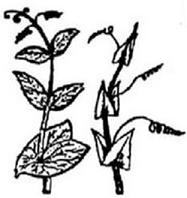
Identify the modification seen in the figure:

-
100%
a) Tendril.
-
0%
b) Hook.
-
0%
c) Thorn.
-
0%
d) Phyllode.
Q.19.
In which placentation, more than one placentum is present?
-
25%
a) Free central
-
0%
b) Basal.
-
0%
c) Apical.
-
75%
d) Parietal.
Q.20.
If a raceme inflorescence is branched , it is call?
-
0%
a) Umbel
-
67%
b) spike
-
0%
c) Cymose
-
33%
d) Panicle
Q.21.
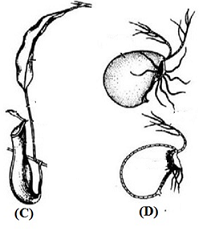
Bladder of Utricularia and Pitchers of nepenthes are modifications of: (JKCMEE 2004)
-
0%
a) leaves
-
50%
b) stems
-
50%
c) root
-
0%
d) flowers
Q.22.
A root can be differentiated from the stem because of the absence of
-
33%
a) Green colour
-
67%
b) Nods and internodes
-
0%
c) Hair
-
0%
d) Branches
Q.23.
Which of the following is actually not a flower?
-
0%
a) Shoe flower
-
0%
b) Sun flower
-
0%
c) Rose
-
100%
d) Pea
Q.24.
Name of the following aestivation type:
-
50%
a) Valvate
-
0%
b) Twisted
-
50%
c) Imbricate
-
0%
d) Quincuncial
Q.25.
Which of the following is an incorrect pair?
-
100%
a) Swollen placenta – Tobacco.
-
0%
b) Prop roots – Banyan.
-
0%
c) Sorosis fruit – Fig.
-
0%
d) Pineapple – sucker.
Q.26.
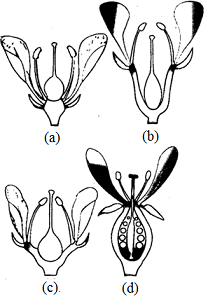
On the basis of relative position of different floral parts on the thalamus, a flower can be hypogynous, Perigynous or epigynous. With respect to the given figures (a-d), select the correct option:

-
0%
a) Hypogynous, Epigynous, Epigynous, Perigynous.
-
0%
b) Epigynous, Hypogynous, Perigynous, Perigynous.
-
50%
c) Epigynous, Hypogynous, Perigynous, Hypogynous.
-
50%
d) Hypogynous, Perigynous, Perigynous, Epigynous.
Q.27.
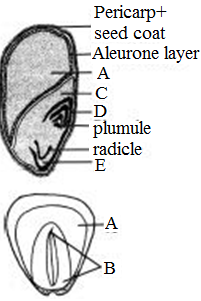
The given figure shows a typical structure of monocotyledonous seeds. Identify A, B, C, D and E parts marked in the given figures.
-
50%
a) A - Endosperm, B - Embryo, C - Scutellum, D - Coleorhizae, E - Coleoptile
-
50%
b) A- Embryo, B - Endosperm, C - Scutellum, D - Coleoptile, E - Coleorhizae
-
0%
c) A - Endosperm, B - Embryo, C - Scutellum, D - Coleoptile, E - Coleorhiza
-
0%
d) A - Embryo, B - Endosperm, C - Scutellum, D - Coleorhiza, E - Coleoptile
Q.28.
Clove is actually a:
-
0%
a) Fruit.
-
33%
b) Seed.
-
0%
c) Bark.
-
67%
d) Floral bud.
Q.29.
Identify the type of inflorescence given below:
-
0%
a) Cyathium.
-
50%
b) Dichasial cyme.
-
0%
c) Umbel.
-
50%
d) Panicle.
Q.30.
Match the following:
| 1 Corm | (a) Onion |
| 2 Bulb | (b) Euphorbia |
| 3 Phyllode | (c) Rhizophora |
| 4 Phylloclade | (d) Zaminkand |
| 5 Pneumatophores | (e) Acacia. |
-
0%
a) a = 1 ; b = 5 ; c = 2 ; d = 4; e = 3
-
50%
b) a = 2 ; b = 4 ; c = 5 ; d = 1; e = 3
-
0%
c) a = 4 ; b = 1 ; c = 3 ; d = 5; e = 2
-
50%
d) a = 4 ; b = 5 ; c = 1 ; d = 2; e = 3
Q.31.
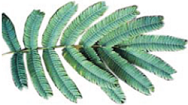
Choose correct option according to given leaf:
-
0%
a) Moringa – multipinnate compound leaf
-
0%
b) Balanites- Bifoliate compound leaf
-
50%
c) Caesalpinia - bipinnate compound leaf
-
50%
d) Aegle – multifoliate
Q.32.
Zygomorphic condition can be represented as: (UP CPMT,, 2009)
-
100%
a) ⊕
-
0%
b) %
-
0%
c) P
-
0%
d) G
Q.33.
When the trunk is unbranched and bears crown of leaves at its apex, it is known as :
-
50%
a) Runner
-
0%
b) Sucker
-
50%
c) Caudex
-
0%
d) Culm
Q.34.
The arrangement of leaves on stem is called:
-
33%
a) Venation
-
0%
b) Vernation
-
67%
c) Phyllotaxy
-
0%
d) Axis
Q.35.
Ginger is an underground stem. It is distinguished from root because
-
33%
a) it lacks chlorophyll.
-
0%
b) it stores food.
-
67%
c) it has nodes and internodes.
-
0%
d) it has xylem and vessels.
Q.36.
Sweet potato is a modification of:
-
0%
a) Primary root
-
0%
b) leaf
-
67%
c) underground root
-
33%
d) Adventitious root
Q.37.
A fibrous root system is better adapted than tap root system for:
-
0%
a) Storage food
-
33%
b) Anchorage of plant to soil
-
33%
c) Absorption of water and organic food.
-
33%
d) Transport of water and organic food.
Q.38.
Staments with free anthers but filaments fused into a number of groups are;
-
33%
a) Polyadelphous
-
67%
b) Diadelphous
-
0%
c) Monadelphous
-
0%
d) Syngenesious
Q.39.
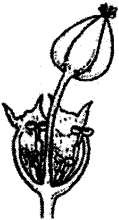
Identify the given placentation and select the correct pair:
-
0%
a) Parietal with false septum – Mustard.
-
50%
b) Parietal with true septum – Mustard.
-
50%
c) Free central with true septum – Gram.
-
0%
d) Free central with false septum – Gram.
Q.40.
Cymose inflorescence is present in: (A.I.P.M.T. 2012)
-
0%
a) Sesbania
-
0%
b) Trifolium
-
100%
c) Brassica
-
0%
d) Solanum
Q.41.
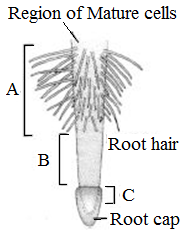
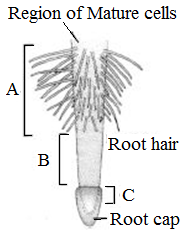
The given figure shows the region of root tips with their region marked as A, B and C. Choose the option which shows the correct labelling of A, B and C.

-
0%
a) A - Zone of elongation, B - Zone of meiosis, C - Zone of mitosis.
-
0%
b) A - Zone of maturation, B - Zone of meristematic activity, C - Zone of elongation.
-
100%
c) A - Zone of mitosis, B - Zone of elongation, C - Zone of root cap.
-
0%
d) A - Region of maturation, B - Region of elongation, C - Zone of meristematic activity.
Q.42.
Which of the following statements is correct with respect to the given figure showing the different zones of a typical root?
-
0%
a) Part B mainly helps in absorption of water.
-
0%
b) Quiescent centre is present in part B.
-
50%
c) Part A is suitable for the anatomical studies of roots.
-
50%
d) Differentiation of cells occurs in part C.
Q.43.
Wheat grain is an example of :
-
0%
a) Achene
-
0%
b) Caryopsis
-
50%
c) Nut
-
50%
d) Follicle
Q.44.
Identify the correct families of the given plant species (A, B and C)
-
0%
a) A - Lilliaceae, B - Compositae, C - Malvaceae
-
0%
b) A - Fabaceae, B - Solanaceae, C - Lilliaceae
-
0%
c) A - Compositae, B - Malvaceae, C - Lilliaceae
-
100%
d) A - Solanaceae, B - Fabaceae, C – Lilliaceae