Q.1.
Water potential is maximum in case of ... .... [ JKCMEE 2003]
-
25%
a) Pure water
-
25%
b) 2% glucose
-
25%
c) 10% glucose
-
25%
d) 10% NaCl
Q.2.
Changes in turgidity of guard cells are controlled by .... .... [ MPPMT 2001]
-
67%
a) Potassium
-
0%
b) Chloride
-
0%
c) Malic acid
-
33%
d) All the above
Q.3.
Which of the following is done during ringing experiment ... ...[ CPMT 2010]
-
33%
a) Bark is removed
-
33%
b) Xylem is removed
-
0%
c) Pith is removed
-
33%
d) All the above
Q.4.
Find the correct order for instrument used for measuring (i) Transpiration (ii) Size of stomata (iii) Atmospheric pressure (iv) Osmosis .... [ Har PMT 2002]
-
100%
a) Potometer, manometer, porometer, osmometer
-
0%
b) Manometer, potometer, porometer, osmometer
-
0%
c) Porometer, manometer, potometer, osmometer
-
0%
d) Potometer, porometer, manometer, osmometer
Q.5.
Root pressure is unable to explain the ascent of sap because it is not found in ....
-
50%
a) Bryophytes
-
50%
b) All plants in all seasons
-
0%
c) Trees
-
0%
d) Spring
Q.6.
High CO2 concentration in leaf interior will cause ... ... [ CPMT 1995]
-
50%
a) Stomatal opening
-
0%
b) Stomatal closure
-
50%
c) No effect on stomata
-
0%
d) Stomata are destroyed
Q.7.
Root pressure may be caused by .... ...
-
100%
a) Osmotic flow of water into xylem of absorbing part of root
-
0%
b) Loss of water from xylem of the plant due to transpiration
-
0%
c) Low water potential of leaves
-
0%
d) High water potential of leaves
Q.8.
Rate of transpiration is reduced with ... ... [ MPPMT 1999 ]
-
100%
a) Rise in temperature
-
0%
b) Decrease in light intensity
-
0%
c) Increase in wind velocity
-
0%
d) Increase in water uptake
Q.9.
Stomata open in daytime due to .... ... [ Wardha 2005]
-
50%
a) Decrease in pH
-
50%
b) Decrease in water potential
-
0%
c) Increase in water potential
-
0%
d) Light
Q.10.
Raisins placed in water swell up due to .... ... [ KCET 2008]
-
50%
a) plasmolysis
-
50%
b) Adsorption
-
0%
c) Diffusion
-
0%
d) Endosmosis
Q.11.
Stomata close in response to ... .... [ AMU 2003]
-
100%
a) Hot dry weather
-
0%
b) Abscisic acid
-
0%
c) Cytokinin
-
0%
d) Both a and b
Q.12.
Each stoma is surrounded by ... ...[ Har PMT 2005]
-
50%
a) Passage cells
-
50%
b) Guard cells
-
0%
c) Parenchyma cells
-
0%
d) Lenticels
Q.13.
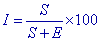
Number of stomata and epidermal cells/mm2 of lower epidermis of X, Y and Z plants are as follows. Arrange them in decreasing order of their stomatal index .... [EAMCET 2009]
| Plant | Stomata | Epidermal Cells |
| X | 30 | 150 |
| Y | 60 | 240 |
| Z | 90 | 400 |
-
0%
a) Z, Y, X
-
100%
b) X, Y, Z
-
0%
c) Y, X, Z
-
0%
d) Y, Z, X
Explanation
Q.14.
Water supply in the plant is due to ... ...[ CPMT 1996]
-
0%
a) Osmosis
-
100%
b) Guttation
-
0%
c) Cohesion force
-
0%
d) Imbibition
Q.15.
The girdling or ringing experiment is that ... ...
-
100%
a) The metallic ring is tightly tied to a stem
-
0%
b) The ring of tissue external to xylem is removed in a stem
-
0%
c) The area is simply marked in the form of ring in a stem
-
0%
d) None of the above
Q.16.
Water potential of a solution is depicted by ... .... [ AIIMS 1996]
-
100%
a) ψp
-
0%
b) ψs
-
0%
c) ψx
-
0%
d) Δψ
Q.17.
Ascent of sap is ... ..
-
100%
a) Upward movement of water in the plant
-
0%
b) Downward movement of organic nutrients
-
0%
c) Upward and downward movement of water in the plant
-
0%
d) Redistribution of inorganic substances in the plants
Q.18.
In thin-leaved mesophytes, stomata open during the day and closed during the night. They belong to ... ...[ CPMT 1991]
-
100%
a) Barley type
-
0%
b) Potato type
-
0%
c) Alfalfa type
-
0%
d) Bean type
Q.19.
Two solutions with the same osmolarity are ... ... [ JKCMEE 2005]
-
100%
a) Isotonic
-
0%
b) Hypertonic
-
0%
c) Hypotonic
-
0%
d) None of the above
Q.20.
Water potential is equal to .... ... [ AMU 1997]
-
100%
a) ψs + O.P.
-
0%
b) ψs = T.P.
-
0%
c) ψp + psiw
-
0%
d) ψs + ψp
Q.21.
Presence of moisture in the atmosphere ... ... [ CPMT 2003]
-
100%
a) Increases rate of transpiration
-
0%
b) Decreases rate of transpiration
-
0%
c) Does not affect rate of transpiration
-
0%
d) Transpiration becomes rapid
Q.22.
Guttation is due to ... ...[ CBSE 2011]
-
100%
a) Negative root pressure
-
0%
b) Positive root pressure
-
0%
c) Transpiration
-
0%
d) None of the above
Q.23.
Bacteria cannot survive in highly salted pickle because ... ... [ Manipur 2009]
-
100%
a) Salt inhibits reproduction of bacteria
-
0%
b) They become plasmolysed and die
-
0%
c) Nutrients in it cannot support life
-
0%
d) Enough light is not available for photosynthesis
Q.24.
Plant cells dipped in distilled water will become .... ...[ MPPMT 1998]
-
100%
a) Turgid
-
0%
b) Plasmolysed
-
0%
c) Flaccid
-
0%
d) Impermeable
Q.25.
Imbibition theory was given by ... ..
-
100%
a) Sachs
-
0%
b) Boehm
-
0%
c) Scholander
-
0%
d) Curtis
Q.26.
Endosmosis of water occurs when water potential of the cell sap is ... ... [ AMU 1996]
-
100%
a) Higher
-
0%
b) Equal
-
0%
c) Lower
-
0%
d) None of the above
Q.27.
Compared to 1M sucrose solution, the ψw of 1M sodium chloride solution is ... ...
-
100%
a) High
-
0%
b) Same
-
0%
c) Lower
-
0%
d) None of the above
Q.28.
An adaptation to reduce transpiration is ... ... [ manipal 2003]
-
100%
a) Spongy parenchyma
-
0%
b) High osmotic pressure
-
0%
c) Hydathodes
-
0%
d) Aerenchyma
Q.29.
Nonfunctional stomata can be seen in .... ..[ Pb PMT 1998]
-
100%
a) Mango leaf
-
0%
b) Pea leaves
-
0%
c) Hydrilla
-
0%
d) Lotous
Q.30.
Which ones regulate stomatal movements ... ... a) IAA b) GS3 c) Zeatin d) ABA
-
0%
a) a, c
-
50%
b) b, c
-
0%
c) c, d
-
50%
d) b, d