Q.1.
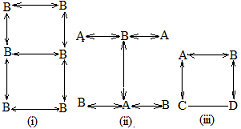
what does the given graph shows
-
25%
a) (i) Community Ecology (ii) Population Ecology (iii) Population Ecology
-
50%
b) (i) Population Ecology (ii) Community Ecology (iii)Ecosystem Ecology
-
25%
c) (i) Population Ecology (ii) Community Ecology (iii) Community Ecology
-
0%
d) None of these
Q.2.
To whom can we correlate the young one developing from the eggs of Daphnia which are laid at normal room temperature ? (i) queen bee (ii) worker bee (iii) male (drone) bee
-
57%
a) i, ii
-
29%
b) i, iii
-
14%
c) ii, iii
-
0%
d) i, ii,iii)
Q.3.
Identify me “ My functioning is like an orchid.
-
43%
a) Protopterus
-
57%
b) Spiny lizard
-
0%
c) Uromastrix
-
0%
d) Spiny platypus
Q.4.
Water holding capacity of land depends on ?
-
38%
a) Soil composition
-
0%
b) Grain size
-
0%
c) Aggregation of grain
-
62%
d) All of these
Q.5.
The term precipitation includes:
-
29%
a) Temperature and rainfall.
-
14%
b) Humidity and hails.
-
0%
c) Rainfall and hails.
-
57%
d) All forms of water that fall to the ground.
Q.6.
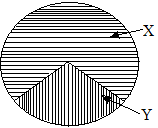
In given chart, what is the problem seen in living organism staying in ‘X’ denoted area ?
-
29%
a) endosmosis
-
0%
b) exosmsis
-
71%
c) a & b both
-
0%
d) getting water and maintain it.
Q.7.
Write appropriate option for antibiosis
-
86%
a) Penicillium fungi and certain gram +ve bacteria
-
14%
b) Penicillium fungi and certain gram -ve bacteria
-
0%
c) Spirocheate and fermicutes
-
0%
d) None of these
Q.8.
Identify the biome that is not correctly matched with the physical parameters given in corresponding Column II and Column III
| Biome | Mean annual temperature [°C] | Mean annual Precipitation [cm] | |
| A | Tropical forest | 20 – 25 | 130 - 430 |
| B | Arctic and alpine tundra | -12 -2 | 10 - 125 |
| C | Coniferous forest | -5 – 5 | 100 – 200 |
| D | Temperate forest | 8 - 22 | 50 - 225 |
-
57%
a) A
-
29%
b) B
-
14%
c) C
-
0%
d) D
Q.9.
To get pollinated by a bee, the Mediterranean Orchid, Ophrys, employs
-
29%
a) Sexual deceit
-
29%
b) Pseudo-copulation
-
29%
c) Reward in the form of Nectar
-
14%
d) Place for laying eggs
Q.10.
Mycorrhizae are the example of
-
0%
a) fungistasis
-
29%
b) amensalism
-
14%
c) antibiosis
-
57%
d) mutualism
Q.11.
Annual migration does not occur in the case of
-
29%
a) salmon
-
29%
b) Siberian crane
-
43%
c) salamander
-
0%
d) arctic tern
Q.12.
Which of the following associations shows mutualism?
-
57%
a) Fig and wasp
-
29%
b) Barnacles on whale
-
14%
c) Roundworms in human intestine
-
0%
d) Orchids on mango tree
Q.13.
Animals in cold regions have fur because
-
57%
a) hair is a good insulating material
-
43%
b) hairs trap air which acts as insulator
-
0%
c) they like fur
-
0%
d) none of these
Q.14.
Select the combination of correct statements: (i) Populations evolve to maximise their reproductive fitness also called Darwinian fitness (higher r value) in the habitat in which they live. (ii) The population growth r is inversely proportional to generation time. (iii) The housefly, which has a short life span and produces a large number of eggs could be considered as K selected species. (iv) Under a particular set of selection pressure, organisms evolve towards the most efficient reproductive strategies. (v) Life history traits of organisms have evolved in relation to the constrains imposed by biotic and abiotic factors in their habitat.
-
43%
a) (i), (ii) and (iii).
-
14%
b) (i), (iii) and (iv).
-
14%
c) (iii), (iv) and (v).
-
29%
d) All except (iii).
Q.15.
Assertion: Predation and parasitism are considered to be negative interactions. Reason: Parasites and predators limit the population on their host species.
-
100%
a) Both Assertion and Reason are true and Reason is the correct explanation of Assertion.
-
0%
b) Both Assertion and Reason are true but Reason is NOT the correct explanation of Assertion.
-
0%
c) Assertion is true but Reason is false.
-
0%
d) Both Assertion and Reason are false.
Q.16.
Which is the example of intraspecific competition for food ?
-
29%
a) Barnacle on rocks of the submerged water
-
29%
b) Two female dogs and two male dogs
-
14%
c) Various types of lichens
-
29%
d) Paramaecium caudatuns and P.aurelia in laboratory.
Q.17.
Which option is correct for the given statement . Statement X : Density dependent factors are intrinsic Reason R : They are generated in population only
-
57%
a) Both statement are true
-
14%
b) Both statement are false
-
0%
c) X is true, y is false
-
29%
d) X is false, Y is true
Q.18.
If the Birth rate is 10 and death rate is 0 then what is VITAL INDEX ?
-
43%
a) 0
-
14%
b) 100
-
29%
c) Infinative
-
14%
d) 1
Q.19.
Which of the following is not possible in ecosystem where microflora is absent
-
29%
a) Photosynthesis
-
14%
b) Decomposition
-
43%
c) Assimilation
-
14%
d) None of these
Q.20.
In which of the following aquatic ecosystems habitat fluid (liquid) is very concentrated compared to body fluid ?
-
57%
a) Marine
-
29%
b) Esturine
-
14%
c) Riverine
-
0%
d) pond.
Q.21.
Mathc column I with column II
| Column - I | Column - II |
| Mutualism | (p) Barnacles |
| Competition | (q) Tiger |
| Predation | (r) Mites |
| Parasitism | (s) Sea anemone |
-
57%
a) (1-s), (2-r), (3-p) (4-q)
-
14%
b) (1-r), (2-s), (3-q) (4-p)
-
29%
c) (1-s), (2-p), (3-q) (4-r)
-
0%
d) (1-q), (2-r), (3-s) (4-p)
Q.22.
When exposed to cold temperatures, which of the following is responsible for maintaining constant body temperature in humans
-
57%
a) Vasoconstriction and shivering
-
14%
b) Vasodilation and shivering
-
29%
c) Vasodilation and sweating
-
0%
d) Vasoconstriction and sweating
Q.23.
The Great Barrier Reef along the east coast of Australia can be categorised as
-
14%
a) population
-
14%
b) community
-
43%
c) ecosystem
-
29%
d) biome
Q.24.
Which of the following is not a factor that would limit the growth of a population?
-
29%
a) Food shortage
-
14%
b) Immigration
-
14%
c) Disease
-
43%
d) Famine
Q.25.
In ocean, Red, Brown and green algae are distributed at different depths depends on:
-
43%
a) Temperature variation .
-
29%
b) Seasonal variation.
-
0%
c) Salt concentration.
-
29%
d) Wavelength difference of light.
Q.26.
Which of the following statement is false about high altitude for the compensation of low oxygen availability? (i) Increasing RBC count. (ii) Increasing breathing rate. (iii) Increasing binding affinity of haemoglobin. (iv) Continue altitude sickness. (v) Decrease breathing rate.
-
43%
a) All are correct.
-
0%
b) Only (i), (ii) and (iii) are true.
-
43%
c) Only (iii), (iv) and (v) are false.
-
14%
d) Only (i), (iv) and (v) are false.
Q.27.
Total number of individuals of a species per unit area and per unit time is called:
-
14%
a) Population size.
-
71%
b) Population density.
-
0%
c) Demography.
-
14%
d) Population dynamics.
Q.28.
Which of the following statement(s) are wrong? I. Equation of population density, D = S/N. II. Population density varies from time to time. III. Increase in number of individuals in a population through reproduction under given environmental conditions is called natality. IV. Migration will not change population size.
-
33%
a) I and III.
-
33%
b) II and IV.
-
17%
c) I and IV.
-
17%
d) I only.
Q.29.
What is true for the given statements ? Statement X : Birds and Mammals obtain greater body size in cold region than in warm regions. Statement Y : Birds and Mammals are Homeothermic (warm blooded)animals. Statement Z : Reptiles are smaller in cold region.
-
29%
a) X=True; Y=False; Z=True
-
29%
b) X=True; Y= True; Z= False
-
14%
c) X=True; Y= True; Z= True
-
29%
d) X=False; Y= True; Z= True
Q.30.
Hygroscopic skin is seen in.....
-
14%
a) Kangaroo rat
-
14%
b) Uromatrix
-
71%
c) Spiny tailed lizard
-
0%
d) Camel