Q.1.
How mandy sq. km. area of biosphere is occupied by marine habitat. ?
-
22%
a) 3,62,000,000
-
0%
b) 36 crore 20 lacs
-
22%
c) 36,20 Million
-
56%
d) all of these
Q.2.
Biological control as pest control in agriculture is an example of .....
-
62%
a) Predation
-
25%
b) Competition
-
12%
c) Emigration
-
0%
d) diseases
Q.3.
Asymptote in a logistic growth curve is obtained when
-
25%
a) The value of ‘r’ approaches zero
-
62%
b) K = N
-
12%
c) K > N
-
0%
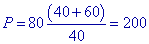
d) KQ.4.Some students, during a study, caught, marked and released 80 fishes in a pond. Later 100 fishes were caught at random. Among these 40 were found to be marked. What is the approximate number of fishes in the pond?
-
43%
a) 50
-
29%
b) 100
-
29%
c) 200
-
0%
d) 4000
Explanation
Q.5.If the Bengal Tiger becomes extinct-
12%
a) hyenas and wolves will become scars
-
38%
b) the wild areas will be safe for man and domestic animals
-
12%
c) its gene pool will be lost forever
-
38%
d) the populations of beautiful animals like deer will get stabilized
Q.6.Some animals have a constant high body temperature. This is because-
12%
a) they like this temperature
-
38%
b) they can work fast in the temperature
-
12%
c) they prefer to live in cold region
-
38%
d) they are active animals
Q.7.A force acting against achievement of highest possible level of population growth is:-
11%
a) Carrying capacity.
-
44%
b) Environmental resistance.
-
11%
c) Biotic potential.
-
33%
d) Darwinian fitness.
Q.8.Assertion: The epiphytes use the trees only for attachment and manufacture their own food by photosynthesis. Reason: This type of interaction is a type of negative interaction which results in a negative effects on growth and survival of one or both of the population.-
38%
a) Both Assertion and Reason are true and Reason is the correct explanation of Assertion.
-
25%
b) Both Assertion and Reason are true but Reason is NOT the correct explanation of Assertion.
-
38%
c) Assertion is true but Reason is false.
-
0%
d) Both Assertion and Reason are false.
Q.9.Average human population in a certain time area is 5000 in which 1111 children are produced during an years, find out the birth rate ?-
25%
a) 0.1111
-
12%
b) 0.3333
-
62%
c) 0.2222
-
0%
d) 0.4444
Q.10.If at “t” time population density is N, then what is the equation for the population density at (t+1) time ?-
12%
a) N (t+1) = Nt - [CD+E] - [B+I)]
-
12%
b) N (t+1) = Nt+B+I-D-E
-
50%
c) N (t+1) = Nt+(B+I)-(D+ E)]
-
25%
d) All of these
Q.11.To whom can we correlate the young one developing from the eggs of Daphnis which are laid at normal room temperature ? (i) queen bee (ii) worker bee (iii) male (drone) bee-
62%
a) i, ii
-
0%
b) i, iii
-
38%
c) ii, iii
-
0%
d) i, ii,iii
Q.12.Consider the following adaptations in desert plants: (i) Many desert plants have a thick cuticle on their leaf surfaces and have their stomata arranged in surface to minimise water loss. (ii) They also have special photosynthetic pathway (CAM) that enables them to close their stomata during day. (iii) Leaves are modified as prickles in succulents like Opuntia. (iv) Photosynthetic function is taken over by the flattened stems. How many of the following statements are true:-
12%
a) 1.
-
25%
b) 2.
-
38%
c) 3.
-
25%
d) 4.
Q.13.he figure given below is a diagrammatic representation of response of organisms to abiotic factors. What do A, B and C represent respectively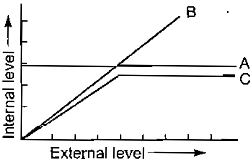
-
25%
a) A= conformer ; B = regulator ; C = partial regulator
-
12%
b) A= regulator; B = partial regulator ; C = conformer
-
12%
c) A= partial regulator; B = regulator; C = conformer
-
50%
d) A= regulator; B = conformer ; C = partial regulator
Q.14.What is true for marine animals ?-
25%
a) Because of exosmosis they drink sea water
-
12%
b) As they drink sea water exosmosis occurs
-
62%
c) Because of exosmosis body fluid become hypotonic, so they drink sea water
-
0%
d) None of these
Q.15.Which is related to the given statement ? In the begining of summer crow and koel lays eggs.-
25%
a) As the light intensity decerease reproductive organs become active
-
38%
b) In some Birds increase or decrease in intensity of hight- makers reproductive organs active or inactive respecctivity
-
25%
c) with increase in temperture, gonads become active
-
12%
d) None of these
Q.16.One of the major difficulties in the biological control of insect pest is that-
43%
a) the predator develops a preference to other diets and may itself become a pest
-
43%
b) the predator does not always survive when transferred to a new environment
-
14%
c) the method is less effective as compared with the use of insecticides
-
0%
d) the practical difficulty of introducing the predator to specific areas
Q.17.Match the column I and Column II and choose the correct option:Column I Column II (a) Mutualism Cattle egret and grazing cattle (b) Commensalism Lice on humans (c) Parasitism Sparrow ants in seeds (d) Predation Lichen (e) Ammensalism One is harmed and other is not harmed -
43%
a) a=3; b=1; c=4; d=2; e=5
-
0%
b) a=1; b=2; c=4; d=5; e=3
-
43%
c) a=1; b=3; c=4; d=5; e=2
-
14%
d) a=4; b=1; c=2; d=3; e=5
Q.18.In a population, percapita birth rate is 0.025 and percapita death rate is 0.008 during a unit time period. What is the intrinsic rate of natural increase for the population:-
14%
a) 0.007.
-
43%
b) 0.017.
-
14%
c) 0.17.
-
29%
d) 0.71.
Q.19.Which among the following is not a major biome of India?-
57%
a) Tropical rain forests.
-
0%
b) Deciduous forests.
-
14%
c) Sea coast.
-
29%
d) Grasslands.
Q.20.From the graph of given population growths, Select the correct option having the correct values from the bar graph: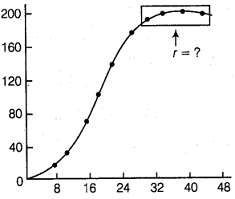
-
14%
a)

-
29%
b)

-
14%
c)

-
43%
d)

Q.21.What is the temperature at which archeobacteria can survive ?-
29%
a) 90°C
-
43%
b) 100°C
-
14%
c) 110°C
-
14%
d) All of these
Q.22.Which of the following is not a function of predators-
43%
a) They act as conduits for energy transfer across trophic levels
-
14%
b) They keep prey populations under control
-
0%
c) They help in the stabilization of ecosystems
-
43%
d) They decrease the species diversity in a community
Q.23.Two opposite forces operate in the growth and development of every population. One of them is related to the ability to reproduce at a given rate. The force opposite to it is called-
14%
a) fecundity
-
29%
b) environmental resistances
-
43%
c) biotic control
-
14%
d) mortality
Q.24.The sphere of living matter together with water, air and soil on the surface of earth is called-
29%
a) atmosphere
-
29%
b) hydrosphere
-
14%
c) lithosphere
-
29%
d) biosphere
Q.25.The plants which can withstand with narrow and broad range of temperature tolerance respectively are-
29%
a) monothermal and stenothermal
-
0%
b) stenothermal and monothermal
-
29%
c) stenothermal andeurythermal
-
43%
d) stenothermal and mesothermal
Q.26.Which of the following is not an Ectoparasite?-
57%
a) Lice on humans
-
14%
b) Copepods on marine fishes
-
0%
c) Mistletoe on other plants
-
29%
d) Female Anopheles on humans
Q.27.Co – evolution is not exhibited in which of the following interactions:-
14%
a) Parasite – host relationship.
-
57%
b) Hermit crab and sea anemone.
-
29%
c) Ophrys orchid and bee.
-
0%
d) Fig flower and wasp.
Q.28.What is the reason for the success of mammals to thrive in Antarctica or in the Sahara desert?-
29%
a) Constant body temperature.
-
29%
b) Varying body temperature.
-
29%
c) Osmotic concentration very low.
-
14%
d) Relative amount of internal oxidation.
Q.29.Which of the following is correct statement ?-
29%
a) uromatrix lizard stores water in the intestine
-
14%
b) Camel stores water in its stomach
-
29%
c) Anabus develops accesary respiratory organs to respire in water.
-
29%
d) Kangaroo rat undegeoes hibernation.
Q.30.X= Arthropods, Y = Mollusca, z = Coelenterates :-If the X by using Y, lives benifical life with z, then which of the following is correct example ?-
57%
a) X = cockroachY = pearl oyester Z = Hydra
-
14%
b) X = Millipede Y = pila Z = jellyfish
-
29%
c) X = Hermit crab Y = Gastropoda Z = sea anenone
-
0%
d) All of these
-
43%