Q.1.
A logistic growth curve depicting population that is limited by carrying capacity is shaped like the latter .... .... [D.P.M.T.2010]
-
62%
a) J
-
8%
b) F
-
15%
c) M
-
15%
d) S
Q.2.
Top soil is darker and .... .... [D.P.M.T.1999]
-
18%
a) Contains more Na and Mg
-
0%
b) Is drier than subsoil
-
73%
c) Contains more organic matter
-
9%
d) Is wetter than subsoil
Q.3.
Actively moving organisms in aquatic ecosystem are .... .... [Odisha 2011]
-
9%
a) Benthos
-
36%
b)Zooplankton
-
27%
c) Phytoplankton
-
27%
d) Nekton
Q.4.
Plants growing in saline soil/high concentration of salts are .... .... [C.P.M.T.2002]
-
10%
a) Xerophytes
-
80%
b) Halophytes
-
10%
c) Heliophytes
-
0%
d) Hydrophytes
Q.5.
An obligate root parasite is .... .... [B.H.U. 2005]
-
33%
a) Viscum
-
0%
b) Striga
-
22%
c) Loranthus
-
44%
d) Rafflesia
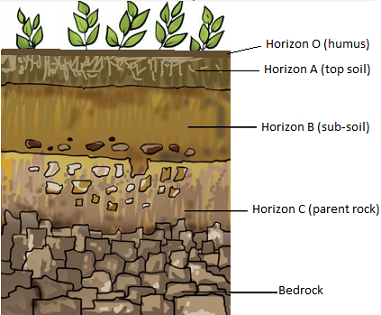
Q.6.
Humus is formed in .... .... [B.H.U.2007]
-
56%
a) Horizon-A
-
22%
b) Horizon-O
-
11%
c) Horizon-B
-
11%
d) Horizon-C
Explanation
Q.7.
Biosphere is made of .... .... [C.P.M.T.1990]
-
11%
a) Living beings and their remains
-
67%
b) Living beings + lithosphere + hydrosphere + atmosphere
-
0%
c) Living beings + lithosphere
-
22%
d) Living organisms + lithosphere + hydrosphere
Q.8.
Biotic factors refer to .... .... [Pb.P.M.T.1999]
-
12%
a) Gases produced by industries
-
12%
b) Nutrient deficient soils
-
75%
c) Living organisms
-
0%
d) Fossil fuels
Q.9.
Large sized rooted plants found in shallow waters are called .... .... [H.P.P.M.T. 2007]
-
56%
a) Macrophytes
-
11%
b) Microphytes
-
22%
c) Phagophytes
-
11%
d) Saprophytes
Q.10.
Deep black soil is productive, due to high proportion of .... .... [C.B.S.E.1991]
-
25%
a) Sand and zinc
-
0%
b) Gravel and calcium
-
75%
c) Clay and humus
-
0%
d) Silt and earthworms
Q.11.
Name the equipment used in measurement thermal behaviour of water .... .... [Odisha 2006]
-
25%
a) SEM
-
25%
b) Differential scanning calorimeter
-
12%
c) Real time PCR
-
38%
d) MALDI-TOF
Q.12.
A physiological xerophyte is .... .... [E.A.M.C.E.T.2002]
-
25%
a) Salicornia
-
12%
b) Euphorbia
-
25%
c) Salvia
-
38%
d) Agave
Q.13.
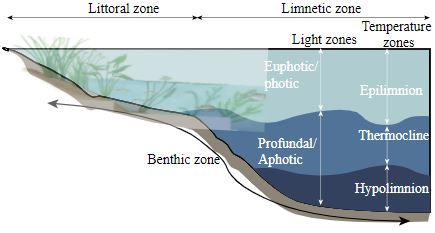
Open water zone beyond littoral zone is .... .... [H.P.P.M.T.2007]
-
38%
a) Limnetic zone
-
25%
b) Coastal zone
-
0%
c) Profundal zone
-
38%
d) Benthic zone
Explanation
Q.14.
Birth rate minus death rate is .... .... [J.I.P.M.E.R. 2004]
-
25%
a) Reproductive rate
-
38%
b) population index
-
38%
c) Population density
-
0%
d) Population frequency
Q.15.
Habitat together with functions of a species consititue its .... .... [C.P.M.T.2005]
-
38%
a) Topography
-
25%
b) Trophic level
-
0%
c) Boundary
-
38%
d) Niche
Q.16.
Ecology is connected with the study of .... .... [J.I.P.M,E.R.1989]
-
29%
a) Environmental factors
-
0%
b) Plant adaptations
-
0%
c) Effect of plants on environment
-
71%
d) All of above
Q.17.
Root cap is absent in .... .... [Har.P.M.T. 2007]
-
57%
a) Xerophytes
-
29%
b) Mesophytes
-
14%
c) Hydrophytes
-
0%
d) Halophytes
Q.18.
Mangrove of marshy Sunderbans is characterised by .... .... [A.F.M.C.1999]
-
57%
a) Pneumatophores
-
14%
b) Prop roots
-
0%
c) Vivipary
-
29%
d) All the above
Q.19.
Which ones are true about interdependence (a) One is benefitted and other unaffected in mutualism. (b) Both the partners are benefitted in commensalism. (c) One kills and feeds on another in predators. (d) Both partners are benefitted in symbiosis Kerala 2007
-
17%
a) a and b only
-
17%
b) a and c only
-
17%
c) b and d only
-
50%
d) c and d only
Q.20.
Humus is important for plant growth as it is .... .... [J.I.P.M.E.R.1987]
-
14%
a) Made of dead organic matter
-
0%
b) Derived from leaves
-
86%
c) Rich in nutrients and increases aeration and decrease water holding capacity of soil
-
0%
d) Partially decomposed
Q.21.
Total number of all species in given region constitute .... .... [D.P.M.T. 2011]
-
29%
a) Biota
-
21%
b) Flora
-
14%
c) Fauna
-
36%
d) Diversity
Q.22.
Nutrient enrichment of water body is ..... ..... [D.P.M.T.2002]
-
83%
a) Eutrophication
-
0%
b) Stratification
-
17%
c) Biomagnification
-
0%
d) None of the above
Q.23.
Correct sequences of plants in hydrosere is .... .... [C.B.S.E. 2009]
-
33%
a) Pistia → Volvox → Scripus → Hydrilla → Oak → Lantana
-
17%
b) Oak → Lantana → Volvox → Hydrilla → Pistia → Scripus
-
17%
c) Oak → Lantana → Scripus → Pistia → Hydrilla → Volvox
-
33%
d) Volvox → Hydrilla → Pistia → Scripus → Lantana → Oak
Q.24.
Synecology is study of .... .... [C.P.M.T.1995]
-
17%
a) Human environment of a place
-
0%
b) Biotic environment of a place
-
17%
c) Abiotic component of a place
-
67%
d) Biotic community in relation to environment of a place
Q.25.
Aquatic photo diffraction produces zones ..... ..... [C.P.M.T.2002]
-
20%
a) Euphotic, disphotic and aphotic
-
10%
b) Aphotic, euphotic and disphotic
-
10%
c) Euphotic, aphotic and disphotic
-
60%
d) Disphotic, aphotic and euphotic
Q.26.
Succession is .... .... [Pb P.M.T. 2007]
-
17%
a) Orderly process of community change till stability
-
33%
b) Gradual convergent, directional and continuous process
-
17%
c) Species of biotic communities that appear generally in barren area
-
33%
d) All the above
Q.27.
Which one represents correct match between organism and its ecological niche? .... .... [A.I.I.M.S. 2005]
-
29%
a) Vallisneria and pond
-
43%
b) Desert locust and desert
-
14%
c) Vultures and dense forest
-
14%
d) Plant lice and leaf
Q.28.
Match the following .... .... [Kerala 2005]
| mutualism | (p) beneficial to a, no effect for b |
| competition | (q) beneficial to both a and b |
| parasitism | (r) beneficial to a and inhibitory for b |
| predation | (s) beneficial to a and harmful for b |
| commensalism | (t) harmful to both a and b |
-
20%
a) 1 - t, 2 - s, 3 - p, 4 - q, 5 - r
-
0%
b) 1 - p, 2 - r, 3 - q, 4 - t, 5 - s
-
80%
c) 1 - q, 2 - t, 3 - s, 4 - r, 5 - p
-
0%
d) 1 - r, 2 - p, 3 - q, 4 - s, 5 – t
Q.29.
Rhizophora is characteristic member of .... .... [M.P.P.M.T.2004]
-
17%
a) Salt swamp
-
50%
b) Mangrove vegetation
-
0%
c) Swamp forest
-
33%
d) Marsh plants
Q.30.
Individuals of species which occurs in a particular area constitute .... ..... [J.I.P.M.E.R.1997]
-
29%
a) Flora
-
14%
b) Fauna
-
57%
c) Population
-
0%
d) Flora and Fauna