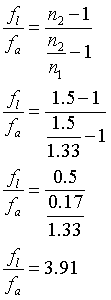
Q.1.
Light passes from air to liquid. The angle of incidence is 60°. The deviation produced is 15°. The refractive index of the liquid is
-
20%
a)1.5
-
60%
b) 1.33
-
20%
c)1.22
-
0%
d)1.63
Q.2.
Light of wave length 7200Å in air has a wave length in glass ( µ=1.5) equal to
-
25%
a) 7200 Å
-
25%
b) 4800 Å
-
25%
c)10800 Å
-
25%
d)7201.5Å
Q.3.
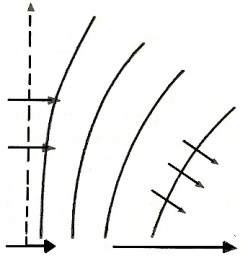
Successive wave fronts propagating in a material medium are shown in figure. The refractive index of the medium
-
25%
a)increases as Y increases
-
25%
b) increases as X- increases
-
25%
c)decreases as Y decreases
-
25%
d)Velocity of light and wave length of the wave decreases with
Q.4.
The phenomenon of dispersion arises because of
-
25%
a) the decomposition of white light beam by a prism
-
0%
b) the refraction of light
-
50%
c) The refractive index of the prism material
-
25%
d) the corpuscular nature of matter
Q.5.
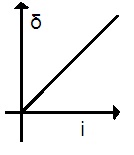
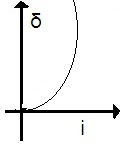
Which of the following represents correctly the variation of angle of deviation (δ) with angle of incidence(i) for refraction at prism
-
25%
a)
-
50%
b)

-
25%
c)
-
0%
d)
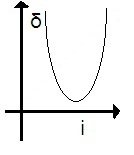
Q.6.
A lens formed a sharp image on a screen. On inserting a parallel side slab of glass between the lens and the screen it is found necessary to move the screen a distance d ways from the lens in order to form the sharp image. If the refractive index of the glass slab relative to air is µ, then the thickness of the slab is
-
50%
a) d / µ
-
0%
b) µ/d
-
25%
c)µd / (µ - 1)
-
25%
d)(µ-1)d/ µ
Q.7.
A point source is located 275 cm below the surface of lake. The area of the surface that transmits all the light that emerges from the surface is
-
0%
a) 3.04 m2
-
67%
b) 304 m2
-
33%
c)30.4 m2
-
0%
d)30 m2
Q.8.
Refractive index is
-
67%
a) directly proportional to wave length of light
-
33%
b) Inversely proportional to wave length of light
-
0%
c) Inversely proportional to square of wavelength of light
-
0%
d) Directly proportional to the square of wavelength of light
Q.9.
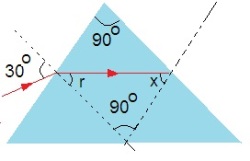
Glass prism has refractive index 1.5 and the refracting angle is 90°. If a ray falls on it at angle of incidence of 30°, then the angle of emergence will be
-
0%
a)60°
-
67%
b) 30°
-
33%
c)45°
-
0%
d)the ray will not emerge out of this prism
Explanation
Q.10.
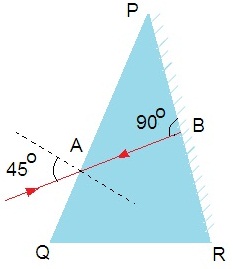
The face PR of a prism PQR of an angle 30° is silvered. A ray is incident on face PQ at an angle of 45° as shown in figure. The refracted ray undergoes reflection on face PR and retraces its path. The refractive index of the prism is
-
0%
a) √2
-
100%
b) 3/√2
-
0%
c)1.5
-
0%
d)1.33
Q.11.
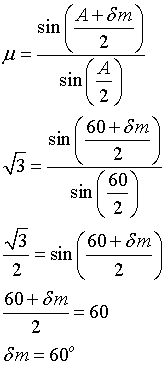
An equilateral prism is made of material of refractive index √The angle of minimum deviation for the prism is
-
33%
a) 30°
-
0%
b) 45°
-
0%
c)60°
-
67%
d)90°
Explanation
Q.12.
Two medium are separated by a plane surface. Speed of light in one medium is 2 ×1010 cm/sec and in the other, it is 2.4×1010 cm/sec. Deduce the critical angle for a ray going from the first medium into the second
-
67%
a) sin-1(1/2)
-
33%
b) sin-1(5/6)
-
0%
c) sin-1(5/12)
-
0%
d) sin-1(1/√2)
Q.13.
A bucket contains transparent liquid and its depth is 40cm. On looking from above bottom appears to be raised up by 8cm. The refractive index of the liquid is
-
33%
a)5/4
-
33%
b) 5
-
0%
c)4/5
-
33%
d)8/5
Explanation

Q.14.
A swimmer is swimming inside a tank of water. He looks up at the sky through the water surface. The surface is calm. Sky is bright due to day light. He can see
-
25%
a) A small illuminated patch directly above his head whose angular size is independent of the depth of the simmer inside the tank
-
50%
b) A small illuminated patch directly above his head whose angular size depends up on the depth of the swimmer
-
0%
c)Nothing but darkness outside the tank
-
25%
d)the entire top surface of the water illuminated
Q.15.
A ray of light passes from vacuum into a medium of refractive index µ, the angle of incidence is found to be twice the angle of refraction. Then the angle of incidence is
-
33%
a) cos-1 (µ/2)
-
33%
b) 2cos-1 (µ/2)
-
0%
c)2sin-1 µ
-
33%
d)2sin-1 (µ/2)
Q.16.
The refractive index of water, glass and diamond are 1.33, 1.50 and 2.40 respectively. The relative index of refraction of diamond relative to water and of glass relative to diamond respectively are nearly
-
67%
a) 1.80, 0.625
-
0%
b) 0.554, 0.625
-
33%
c) 1.80, 1.6
-
0%
d) 0.554, 1.6
Q.17.
A light source placed at the bottom of water beaker 10cm deep forms a illuminated circle of radius 11.2 cm at its surface. If the depth of water in the beaker is increased to 20cm, the radius of the illuminated circle will be
-
0%
a)16.8 cm
-
50%
b) 30.6 cm
-
50%
c)22.4 cm
-
0%
d)None
Q.18.
Light passes through a glass plate of thickness d and refractive index µ. For a small angle of incidence θ, the lateral displacement is
-
0%
a) dθ
-
50%
b) dθ(µ - 1)
-
0%
c)dθ(µ-1) / µ
-
50%
d)dθµ / (µ - 1)
Q.19.
If the critical angle for total internal reflection from a medium to vacuum is 30° the velocity of light in the medium
-
50%
a)3×10⁸ m/s
-
0%
b)1.5×10⁸ m/s
-
50%
c)6×10⁸ m/s
-
0%
d)√3×10⁸ m/s
Q.20.
An object is viewed through a compound microscope and appears in focus when it is 5mm from the objective lens. When a sheet of transparent material 3mm thick is placed between the objective and the microscope, the objective lens has to be moved 1mm to bring the object back into the focus. The refractive index of the transparent material is
-
50%
a) 1.5
-
50%
b) 1.6
-
0%
c) 1.8
-
0%
d) 2.0
Q.21.
Which of the following statement is wrong?
-
0%
a)Light travels faster in vacuum than air
-
50%
b) The wavelength of light is longer than the wavelength of sound
-
0%
c)sound travels nearly 330 metres in one second
-
50%
d)speed of sound is 'Mach number one '
Q.22.
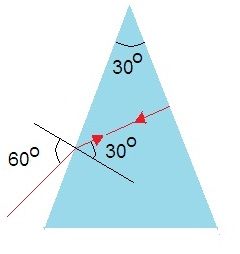
A ray of light is incident at angle of 60° on one face of a prism which has an angle of 30°. The ray emerging out of the prism makes an angle 30° with incident ray. the refractive index of the material of the prism is
-
50%
a) √2
-
0%
b) √3
-
0%
c) 1.5
-
50%
d) 1.6
Explanation
Q.23.
Blue light has wave length of 420 nm in air. In water ( µ=1.33) its wavelength is
-
0%
a)420 nm
-
50%
b) 558 nm
-
0%
c)315.8 nm
-
50%
d)743 nm
Q.24.
Light in air is incident on the surface of a liquid tank. The reflected and refracted rays are mutually perpendicular. If the angle of incidence is 60°, the refractive index of the liquid is
-
50%
a) 1.33
-
0%
b) 1.73
-
0%
c)1.5
-
50%
d)1.4
Q.25.
The angle of prism is A and that of minimum deviation is ( 180° - 2A). Then the refractive index of the material of the prism is
-
0%
a) sin(A/2)
-
50%
b) cos(A/2)
-
0%
c)tan(A/2)
-
50%
d)cot(A/2)
Q.26.
The absolute refractive index of any medium is always
-
50%
a)=1
-
0%
b) > 1
-
0%
c) < 1
-
50%
d) zero
Q.27.
A ray of light falls on a transparent glass plate. Part of it is reflected and part is refracted. The reflected and refracted rays can be perpendicular to each other
-
50%
a)No angle of incidence
-
0%
b) Angle of incidence equal to 90°
-
0%
c)More than one angle of incidence
-
50%
d)Only one angle of incidence
Q.28.
Light of λ=589 nm traverses a tank of height 20.06 m first filled with glycerine ( µ=1.47) and then carbon disulphide. The difference in the time taken to traverse the tank is 1.07× 10⁻⁸s. The refractive index of carbondisulphide is
-
0%
a) 1.6
-
50%
b) 1.62
-
0%
c)1.58
-
50%
d)1.63
Q.29.
The critical angle for total internal reflection of light going from medium I to medium II is given by the relation tanic=5/The refractive index of medium I with respect to medium II is
-
0%
a) 1.4
-
50%
b) 1.6
-
0%
c)√(74) / 5
-
50%
d)5/√(79)
Q.30.
A glass sphere ( µ=1.5) is placed in air. Rays start from a source placed inside glass. The glass sphere is now immersed in water ( µ= 1.33), the critical angle
-
0%
a) Remains same
-
50%
b) Increases
-
50%
c) decreases
-
0%
d) May increase or decrease
Q.31.
A beam of white light is incident on a hollow prism of glass. Then

-
0%
a)The light emerging from prism gives no spectrum
-
100%
b) the light emerging from prism gives spectrum but bending of all colours is away from base
-
0%
c)The light emerging from prism gives spectrum, all the colours bend towards base, the violet most and red the least
-
0%
d)the light emerging from prism gives spectrum, all the colours bend towards base, the violet the least and red the most
Q.32.
The angle of prism is 6° and its refractive index for green light is 1.If a green ray passes through it, the deviation will be
-
0%
a)30°
-
0%
b) 15°
-
50%
c)9°
-
50%
d)3°
Q.33.
A prism of refractive index µg deviates the incident ray towards its base. If it is immersed in a transparent liquid of refractive index µl such that µl > µg, then the prism would
-
50%
a) Deviate the ray towards the base
-
0%
b) Deviate the ray away from the base
-
0%
c)Not deviate the ray
-
50%
d)nothing can be said
Q.34.
Light in air is incident on the surface of liquid tank. The reflected and refracted rays are mutually perpendicular. If the angle of incidence is 60°, the refractive index of the liquid is
-
50%
a) 1.33
-
0%
b) 1.73
-
0%
c) 1.5
-
50%
d) 1.4
Q.35.
The refractive index of µ of a material varies with wave length λ as
-
0%
d)µ=A + B / λ4
-
50%
a)µ=A λ + B
-
50%
b) µ=A + Bλ2
-
0%
c)µ=A + B / λ2
Q.36.
A ray of light travelling inside a rectangular glass block of refractive index √2 is incident on the glass-air surface at an angle of incidence of 45°. The refractive index of air isUnder these conditions the ray
-
50%
a) Will emerge into the air without any deviation
-
0%
b) will be reflected back into the glass
-
0%
c)Will be absorbed
-
50%
d)Will emerge into the air with an angle of refraction equal to 90°
Q.37.
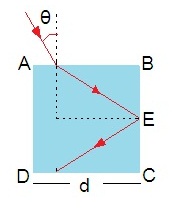
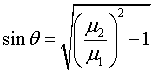
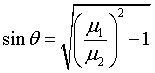
A cube of side d made of material of refractive index µ2 is immersed in liquid of refractive index µA ray is incident on the face AB at an angle θ as shown in figure. The total internal reflection takes place at point E on face BC then
-
0%
a)

-
50%
b)
-
0%
c)
-
50%
d)
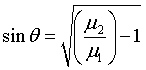
Explanation
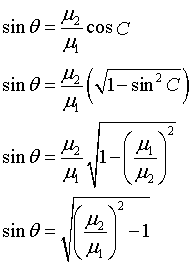
Q.38.
A light source placed at the bottom of a water beaker 10cm deep forms an illuminated circle of radius 11.2 cm at its surface. If the depth of the water in the beaker is increased to 20cm, the radius of the illuminated circle will be
-
0%
a) 16.8 cm
-
50%
b) 30.6 cm
-
50%
c) 22.4 cm
-
0%
d) None
Q.39.
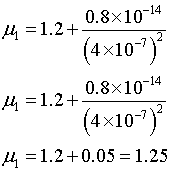
Parallel beam containing light of λ=400 nm and 500nm is incident on a prism as shown in figure. The refractive index µ of the prism is given by the relation Which of the following statements are correct?
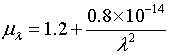
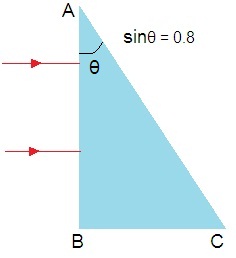
-
50%
a)Light of λ=400 nm undergoes total internal reflection
-
50%
b) Light of λ=500 nm undergoes total internal reflection
-
0%
c)Neither of the two wavelengths undergoes total internal reflection
-
0%
d)Both wavelengths undergoes total internal reflection
Explanation
Q.40.
A rod of flint glass when immersed in carbon disulphide becomes almost invisible because
-
0%
a) Flint glass gets dissolved in carbon disulphide
-
0%
b) Flint glass has the same refractive index as carbon disulphide
-
50%
c)Of total internal reflection
-
50%
d)Of scattering of light
Q.41.
A boy is looking vertically downwards in a tank of water and his eyes are 1 m above the water surface. He sees fish at a depth 3m from the water surface. If refractive index of water with respect to air is 4/3m, the real depth of the fish from the water surface is
-
50%
a) 4 m
-
0%
b) 16/3 m
-
50%
c)5 m
-
0%
d)4/3 m
Q.42.
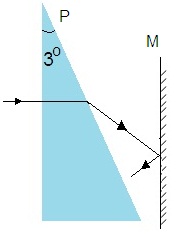
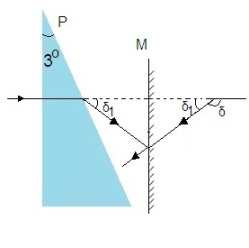
P is a small angled prism of angle 3° made of a material of refractive index 1.A ray of light is incident as shown in figure. M is the plane mirror. The angle of deviation for the ray reflected from mirror M with respect to the incident ray is
-
50%
a) 4.5°
-
0%
b) 175.3°
-
0%
c) 177°
-
50%
d) 178.5°
Explanation
Q.43.
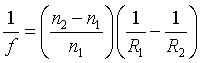
The radii of curvature of two surfaces of lens are 20cm and 30cm and refractive index of the material of the lens is 1.If the lens is concavo-convex then the focal length of the lens is
-
0%
a)24 cm
-
50%
b) 10 cm
-
0%
c)15 cm
-
50%
d)120 cm
Explanation
Q.44.
Decrease in the aperture of a lens changes
-
50%
a) The position of the image
-
0%
b) The size of the image
-
0%
c)The intensity of the image
-
50%
d)Both position and size of the image
Q.45.
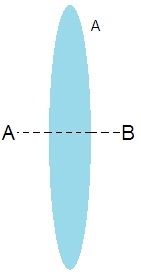
An equi-convex lens is cut into two halves by a plane AB as shown in figure. The focal length of each half so obtained is
-
0%
a) f
-
50%
b) f/2
-
0%
c)2f
-
50%
d)3f/2
Q.46.
The focal length of a convex lens is f. An object is placed at a distance x from its first focal point. The ratio of the size of the real image to that of object is
-
50%
a) f/x2
-
0%
b) x2/f
-
0%
c) f/x
-
50%
d) x/f
Q.47.
A double convex lens, made of material of refractive index 1.5 and having a focal length of 10cm is immersed in a liquid of refractive index 3.The lens will behave as
-
50%
a) Diverging lens of focal length 10cm
-
0%
b) Diverging lens of focal length 10/3 cm
-
0%
c)Converging lens of focal length 10/3 cm
-
50%
d)Converging lens of focal length 30 cm
Explanation

Q.48.
The magnifying power of an astronomical telescope is 8 and the distance between the two lenses is 54cms. The focal length of the eye-lens and objective lens will be respectively [ MPPMT 1991]
-
0%
a) 6 cm and 48 cm
-
50%
b) 8cm and 6cm
-
0%
c) 8 cm and 64cm
-
50%
d) 64cm and 8 cm
Q.49.
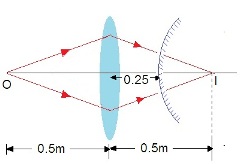
A convex lens forms a real image of a point object placed at a distance of 0.5m. The image is also at a distance of 0.5m from the lens. Mid-way between the lens and the image a convex mirror is placed. It is found that there is no parallax between the object and its image. The focal length of the convex mirror is
-
0%
a) 1 m
-
0%
b) 0.5 m
-
100%
c) 0.25 m
-
0%
d) 0.125 m
Explanation
Q.50.
A lens has a power of 10D, when placed in air. When it is immersed in water ( µ = 1.33) the change in power is ( refractive index of lens material is 1.5)
-
0%
a) 2.55 D
-
50%
b) 5.0 D
-
50%
c) +7.45 D
-
0%
d) -7.45 D
Explanation