Q.1.
Which of the follwoing contains only three pairs of electrons?
-
29%
a) Carbocation
-
47%
b) Carbanion
-
18%
c) Free radical
-
6%
d) None of these
Q.2.
Electrophiles are
-
57%
a) electron loving species
-
29%
b) electrom hating species
-
14%
c) nucleus loving reagents
-
0%
d) nucleus hating reagent
Q.3.
Nucleophiles are
-
7%
a) electron loving
-
7%
b) electron hating
-
79%
c) nucleus loving
-
7%
d) nucleus hating
Q.4.
Which of the following is correct with respect to – I effect of the substituents ? (R = alkyl)
-
17%
a) – NH2 > – OR > – F
-
33%
b) – NR2 < – OR < – F
-
50%
c) – NH2 < – OR < – F
-
0%
d) – NR2 > – OR > – F
Q.5.
The correct statement regarding electrophile is ... [ NEET 2017]
-
36%
a) Electrophile is negatively charge species and can form a bnd by accepting a pair oof electrons from a nucleophile
-
18%
b) Electrophile is a negatively charged species and can form a bond by accepting a pair of electrons from another electrophile
-
9%
c) Electrophile are generally neutral species and can form a bond by accepting a pair of electrons from a uncleophile
-
36%
d) Electrophile can be either neutral or positively charged species and can form a bond by accepting a pair of electrons from a nucleophile
Q.6.
The pair of electron in the given carbanion CH3C ≡C-, is present in which orbitals? [ NEET 2016, Pahe I]
-
36%
a) sp3
-
9%
b) sp2
-
55%
c) sp
-
0%
d) 2p
Q.7.
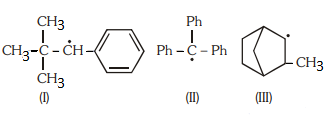
Consider the following compounds Hyperconjugation occurs in
-
15%
a) I only
-
31%
b) II only
-
15%
c) III only
-
38%
d) I anad III
Q.8.
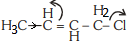
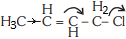
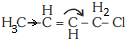
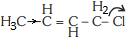
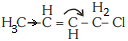
Which of the following is the most correct electron displacement for a nucleophilic reaction to take place? [ AIPMT 2015]
-
12%
a)
-
38%
b)
-
25%
c)
-
25%
d)
Q.9.
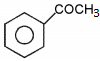
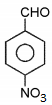
Which one is most reactive towards nucleophilic addition reaction? [ AIPMT 2014]
-
25%
a)

-
25%
b)
-
50%
c)
-
0%
d)
Q.10.
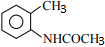
Which one of the following is most reactive towards electrophilic reagent? [ AIPMT 2011]
-
0%
a)

-
43%
b)
-
0%
c)

-
57%
d)

Q.11.
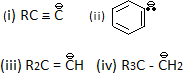
The stability of carbanions in the following is in the order of ... [ AIPMT 2008]
-
60%
a) (i) > (ii) > (iii) > (iv)
-
20%
b) (iii) > (iii) > (iiv) > (i)
-
20%
c) (iv) > (ii) > (iii) > (i)
-
0%
d) (i) > (ii) > (iii)
Q.12.
Base strength of is in the order of ... .. [ AIPMT 2008]

-
0%
a) (ii) > (i) > (iii)
-
33%
b) (iii) > (ii) > (i)
-
0%
c) (i) > (iii) > (ii)
-
67%
d) (i) > (ii) > (iii)
Q.13.
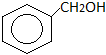
Which one of the following is most reactive towards electrophilic attack? [ AIPMT 2008]
-
0%
a)
-
60%
b)

-
20%
c)

-
20%
d)

Q.14.
Which of the following is least reactive in a nucleophilic substitution reaction? [ AIPMT 2004]
-
25%
a) (CH3)3C - Cl
-
0%
b) CH2 = CHCl
-
50%
c) CH3CH2Cl
-
25%
d) CH2 = CHCH2Cl
Q.15.
In HS-, I-, RNH2, NH2 order of proton accepting tendency will be ...[ AIPMT 2001]
-
33%
a) I- > NH3 > RNH2 > HS-
-
33%
b) NH3 > RNH3 HS- > I-
-
0%
c) RNH2 > NH3 > HS- > I -
-
33%
d) HS> > RNH2 > NH3 > I-
Q.16.
Among the following compounds the decreasing order of reactivity towards electrophilic substitution is ... ..[ AIMPT 200]


-
67%
a) II > I > III > IV
-
33%
b) III > I > II > IV
-
0%
c) IV > I > II > III
-
0%
d) I > II > III > IV
Q.17.
Correct the increasing order of acidity is as ..[ AIPMT 1994]
-
33%
a) H2O, C2H2, H2CO3, phenol
-
0%
b) C2H2, H2O, H2CO3, phenol
-
67%
c) Phenol, C2H2, H2CO3, H2O
-
0%
d) C2H2, H2O, Phenol and H2CO3
Q.18.
1° carbocation is more stable than 2° carbocation Reason: Stability ofcarbocation is due to hypercongugation effect.
-
25%
a) Both Assertion and Reason are true and the Reason is correct explanation of Assertion
-
50%
b) Both Assertion and Reason are true but Reason is not the correct explanation of Assertion
-
0%
c) Assertion is true, but Reason is false
-
25%
d) Assertion and Reason are false
Q.19.
Which of the following folecules is least resonance stabilised? [ IIT 2017 main]
-
0%
a)

-
60%
b)

-
40%
c)

-
0%
d)

Q.20.
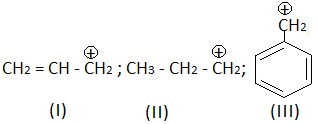
The order of stability of the following carbocations [ IIT mains 2013]
-
75%
a) III > II > I
-
0%
b) II > III > I
-
0%
c) I > II > III
-
25%
d) III > I > II
Q.21.
The correct stability order of the following resonance structure is ... [ IIT 2009]
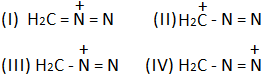
-
33%
a) (I) > (II) > (IV) > (III)
-
33%
b) (I) > (III) > (II) > (IV)
-
33%
c) (II) > (I) > (III) > (IV)
-
0%
d) (III) > (I) > (IV) > (II)
Q.22.
Hyperconjugation involves overlap of the following orbitals [ IIT 2008]
-
0%
a) σ - σ
-
40%
b) σ - p
-
20%
c) p - p
-
40%
d) π - π
Q.23.
ssertion: Tertiary carbonium ions are generally formed more easily than primary carbonium ions. Reason: Hyperconjugative as well as inductive effect due to additional alkyl group stabilize tertiary carbonium ions
-
20%
a) Both Assertion and Reason are true and the Reason is correct explanation of Assertion
-
60%
b) Both Assertion and Reason are true but Reason is not the correct explanation of Assertion
-
0%
c) Assertion is true, but Reason is false
-
20%
d) Assertion and Reason are false
Q.24.
The correct stability order for the following species is ... [ IIT 2008]
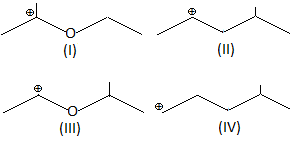
-
50%
a) (II) > (IV) > (I) > (III)
-
0%
b) (I) > (II) > (III) > (IV)
-
50%
c) (II) > (I) > (IV) > (III)
-
0%
d) (I) > (III) > (II) > (IV)
Q.25.
Assertion: Polarisation of one σ-bond caused by the polarization of adjacent σ-bond is referred to as the inductive effect. Reason: The substituents can be classified as electron withdrawing or electron donating groups relative to hydrogen.
-
0%
a) Both Assertion and Reason are true and the Reason is correct explanation of Assertion
-
50%
b) Both Assertion and Reason are true but Reason is not the correct explanation of Assertion
-
50%
c) Assertion is true, but Reason is false
-
0%
d) Assertion and Reason are false
Q.26.
For 1-methoxy-1, 3-butadiene, which of the following resonating structure is least stable? ... [ IIT 2005]
-
0%
a)

-
75%
b)

-
25%
c)

-
0%
d)

Q.27.
Arrange in order of increasing acidic strength ... ...[ IIT 2004]
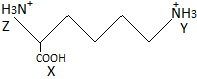
-
0%
a) X > Z > Y
-
33%
b) Z < x > Y
-
67%
c) X > Y > Z
-
0%
d) Z > X > Y
Q.28.
Among the following, the molecule with the highest dipole moment is ... .. [ IIT 2003]
-
0%
a) CH3Cl
-
25%
b) CH2Cl2
-
50%
c) CHCl3
-
25%
d) CCl4
Q.29.
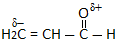
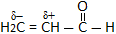
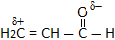
Polarisation of electons in acrolein may be written as [ IIT 1988]
-
33%
a)
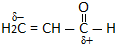
-
33%
b)
-
33%
c)
-
0%
d)
Q.30.
Inductive effect refers to ....
-
0%
a) electron displacement along a carbon chain
-
75%
b) complete transfer of one of the shared pair of electrons to one of the atoms joined by a double bond
-
25%
c) complete transfer of electrons hitherto unshared
-
0%
d) none of the above