Q.1.
Tissue culture technique can produce indefinite number of new plants from a small parental tissue. The economic importance of the technique is in raising ... ..[ AIIMS 1992]
-
29%
a) Variants through picking up somaclonal variations
-
48%
b) Genetically uniform population of an elite species
-
14%
c) Homozygous diploid plants
-
10%
d) Development of new species
Q.2.
Vegetative propagation in Pistia occurs by ...[ CBSE Mains 2010]
-
45%
a) Offset
-
10%
b) Runner
-
25%
c) Sucker
-
20%
d) Stolon
Q.3.
plants propagated by simple layering include climbing roses, forsythia, rhododendron, honeysuckle, boxwood, azalea, and wax myrtle ... [ AFMC 1996]
-
12%
a) Rose
-
41%
b) Jasmine
-
6%
c) Mango
-
41%
d) All the above
Q.4.
Callus is ... [ JKCMEE 2002]
-
31%
a) Tissue developed in the region of would
-
15%
b) Material that injury in phloem
-
38%
c) Undifferentiated mass of calls
-
15%
d) All the above
Q.5.
Axenic culture is ...[ AFMC 2000 ]
-
15%
a) Pure culture of microbe without any external nutrient
-
23%
b) Culture of genes
-
31%
c) Culture of tissue
-
31%
d) Pure culture without contamination
Q.6.
Cellular totipotency was demonstrated by ... [ CBSE 1991]
-
0%
a) Theodore Schwann
-
43%
b) A.V. Leeuwenhoek
-
57%
c) F.C. Steward
-
0%
d) Robert Hooks
Q.7.
In grafting, stock is ...[ MHTCET 2010]
-
50%
a) Part of rooted plant
-
29%
b) Part to be grafted
-
14%
c) Stem of desired variety
-
7%
d) Bud of desired variety
Q.8.
Individuals of a clone have ..[ BHU 1996]
-
0%
a) Same age
-
14%
b) Same height
-
86%
c) Same genome
-
0%
d) Same number of leaves
Q.9.
In sexual reproduction of algae fusion between one large, non-motile (static) female gamete and a smaller motile male gamete is termed as ...[ HPPMT 2011]
-
29%
a) Isogamous
-
35%
b) Anisogamous
-
29%
c) Oogamous
-
6%
d) None of these
Q.10.
Plant propagated by leaves is ...[ DPMT 2003]
-
0%
a) Potato
-
31%
b) Gladiolus
-
38%
c) Kalanchoe
-
31%
d) Agave
Explanation
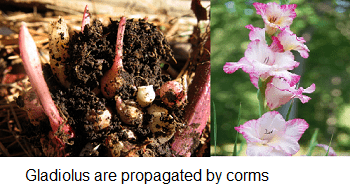
Q.11.
Roots are used in vegetative propagation of ... [ AMU 1996]
-
29%
a) Ginger
-
14%
b) Chrysanthemum
-
36%
c) Sweet Potato
-
21%
d) Potato
Q.12.
Petiole is used in multiplication of ... [ MHCET 2011]
-
33%
a) Peperomia
-
42%
b) Bignonia
-
17%
c) Saintpaulia
-
8%
d) Sansevieria
Explanation
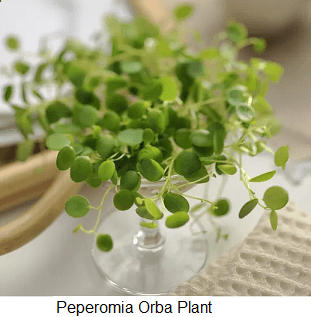
Q.13.
F.C Steward is associated with ...[ DPMT 2002]
-
67%
a) Tissue culture
-
17%
b) Immunology
-
8%
c) Molecular biology
-
8%
d) Genetica
Q.14.
Piece of plant tissue used in tissue culture is ..[ Odisha 2002]]
-
8%
a) Clone
-
77%
b) Explant
-
15%
c) Somaclone
-
0%
d) Inoculant
Q.15.
Potatoes are cultivated by ...[ BHU 2002]
-
21%
a) Cutting of roots
-
14%
b) Seeds
-
57%
c) Buds on tubers
-
7%
d) Foliar buds
Q.16.
Monoestrous animals have ... [ MPPMT 1995]
-
8%
a) One ovulation each month
-
17%
b) One egg
-
58%
c) One breeding season in a year
-
17%
d) One menses each moth
Q.17.
Haploid plant cultures are got from ... [ CBSE 1994]
-
0%
a) Leaves
-
58%
b) Pollen grain
-
17%
c) Root tip
-
25%
d) Buds
Q.18.
In tissue/bacterial culture glassware and nutrients are sterilised through ...[ AIIMS 1996]
-
36%
a) Water bath at 200°C
-
45%
b) Dry air oven at 200°C
-
9%
c) Dehumidifier
-
9%
d) Autoclave
Q.19.
Animals which possess cleidoic eggs exhibit ...[ KCET 2011]
-
10%
a) External fertilization and internal development
-
30%
b) Internal fertilization and internal development
-
40%
c) Internal fertilization and external development
-
20%
d) External fertilization and external development
Q.20.
Virus free plants can be obtained by ...[ AIIMS 1996]
-
57%
a) Antibiotic treatment
-
14%
b) Bordeaux mixture
-
14%
c) Root tip culture
-
14%
d) Shoot tip culture
Q.21.
In which of the following asexual reproduction, a maternal cell produces innumerable unicellular uninucleate offspring ...[ Guj CET 2010]
-
33%
a) Fragmentation
-
47%
b) Multiple fission
-
7%
c) Sporulation
-
13%
d) Parthenogenesis
Q.22.
Greek word "sexus" means ... [ MHTCET 2007]
-
42%
a) Union
-
8%
b) Disjunction
-
17%
c) Disintegration
-
33%
d) Both A and B
Q.23.
Scion is term used in relation to ...[ MHTCET 2010]
-
18%
a) Embryology
-
73%
b) Grafting
-
0%
c) Agamospermy
-
9%
d) Emasculation
Q.24.
Estrous cycle is indication of .... [ MPPMT 1993]
-
54%
a) Breeding period
-
38%
b) Estrogen secretion
-
8%
c) Pregnancy
-
0%
d) Menopause
Q.25.
In Tobacco callus, which one shall induce shoot differentiation in combination of auxin and cytokinin ... [ CBSE 2003]
-
17%
a) Higher concentration of cytokinin and lower concentration of auxin
-
58%
b) Lower concentration of cytokinin and higher concentration of auxin
-
17%
c) Only cytokinin and no auxin
-
8%
d) Only auxin and no cytokinin
Q.26.
Clonal cell lines are got from ...[ MPPMT 2000]
-
9%
a) Tissue system
-
91%
b) Tissue culture
-
0%
c) Tissue homogenization
-
0%
d) Tissue fractionation
Q.27.
In tissue culture, callus can be induced to form shoot or root by altering the ratio of
-
80%
a) Auxin to cytokinin
-
20%
b) Cytokinin to ethylene
-
0%
c) Gibberellin to cytokinin
-
0%
d) Auxin to gibberellin
Q.28.
Embryoids formed in tissue culture from pollen grains are due to ...[ CBSE 2002]
-
0%
a) Double fertilisation
-
15%
b) Test tube culture
-
15%
c) Organogenesis
-
69%
d) Cellular totipotency
Q.29.
The enzyme required to obtain wall-free naked protoplasts are ...[ BHU 1996]
-
36%
a) Cellulase and proteinase
-
45%
b) Cellulase and pectinase
-
18%
c) Cellulase and amylase
-
0%
d) Amylase and pectinase
Q.30.
Estrous cycle is characteristic of ...[ CBSE 1995]
-
8%
a) Human females
-
38%
b) Mammalian females
-
38%
c) Mammalian females other than primates
-
15%
d) Mammals