Q.1.
In a face-centred cubic lattice, atom A occupies the corner position and atom B occupies the face-centre positions. If one atom of B is missing from one of the face-centred points, the formula of the compounds is ...
-
40%
a) A2B2
-
10%
b) A2B
-
30%
c) AB2
-
20%
d) A2B5
Q.2.
In a solid lattice, cation is absent from lattice site and present at an interstitial position, the lattice defect is
-
25%
a) Schottky
-
62%
b) Frenkel
-
12%
c) Interstitial
-
0%
d) None of these
Q.3.
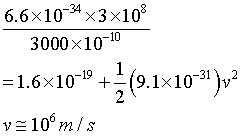
If a stands for the edge length of the cubic systems, simple cubic, body-centred cubic and face-centred cubic, then the ratio of radii of the sphere in these system will be respectively ...[ CBSE 2008]
-
12%
a)

-
12%
b)

-
50%
c)

-
25%
d)

Explanation
Q.4.
A solid has structure in which 'W' atoms are located at the corners of the cube, 'O' atoms are at the centre of the edges and Na atoms are at the centre of the cube. The formula of the compound is
-
29%
a) NaWO2
-
14%
b) Na2WO3
-
43%
c) NaWO3
-
14%
d) NaWO4
Q.5.
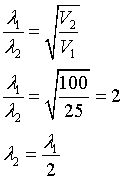
An element (atomic mass = 100) having bcc structure has unit cell edge 400pm. Then, density of element is ... [ CBSE 1996]
-
33%
a) 10.376 g/cc
-
33%
b) 5.191 g/cc
-
17%
c) 7.289 g/cc
-
17%
d) 2.144 g/cc
Explanation
Q.6.
Percentage of free space in a body-centred cubic unit cell is ...[ CBSE 2008]
-
0%
a) 28%
-
17%
b) 30%
-
83%
c) 32%
-
0%
d) 34%
Q.7.
Assertion: Crystalline solids can cause X-ray to diffract Reason: Interatomic distance in crystalline solids is of the order of 0.1 nm [ AIIMS 2004]
-
50%
a) If both the assertion and reason are true and reason explains the assertion.
-
17%
b)If both the assertion and reason are true but reason does not explain the assertion
-
33%
c) If assertion is true but reason is false
-
0%
d) If assertion is false but reason is true.
Q.8.
What is the coordination number of body centred cube? [ BHU 2003]
-
17%
a) 4
-
0%
b) 6
-
83%
c) 8
-
0%
d) 12
Q.9.
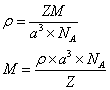
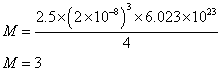
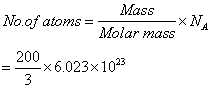
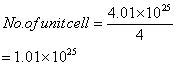
A metallic element has a cubic lattice. Each edge of the unit cell 2Å. The density of the metal is 2.5gcm-The unit cells in 200g of the metal are ...[ CBSE 1994]
-
17%
a) 1×1024
-
0%
b) 1×10²⁰
-
67%
c) 1×10²²
-
17%
d) 1×1025
Explanation
Q.10.
Schottky defect defines imperfection in the lattice structure of a ...[ AIIMS 2002]
-
0%
a) gas
-
0%
b) plasma
-
20%
c) liquid
-
80%
d) solid
Q.11.
For an ionic crystal general formula Ax and coordination number is 6, the value of radius ratio will be ...[ MPPMT 1993]
-
20%
a) greater than 0.73
-
40%
b) between 0.73 and 0.41
-
20%
c) between 0.41 and 0.22
-
20%
d) less than 0.22
Q.12.
A crystalline solid have
-
0%
a) Disordered arrangement
-
20%
b) Long range order
-
60%
c) Short range order
-
20%
d) None of these
Q.13.
Certain crystals produces electric signals on application of pressure. this phenomenon is called
-
25%
a) Pyroelectricity
-
0%
b) Ferroelectricity
-
75%
c) Piezoelectricity
-
0%
d) Ferrielectricity
Q.14.
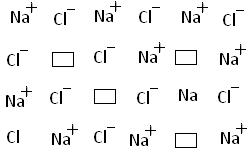
Which type of crystal defect is indicated in the diagram below [ AIEEE 2004]
-
40%
a) Frenkel defect
-
20%
b) Frenek and Schottky defect
-
40%
c) Interstitial defect
-
0%
d) Schottky defect
Q.15.
Which of the following is not a ferroelectric compound
-
0%
a) Rochelle salt
-
80%
b) K4[Fe(CN)6]
-
0%
c) BaTIO3
-
20%
d) KH2PO4
Q.16.
he ratio of cationic radius to anionic radius in an ionic crystal is greater than 0.Its coordination number is [ Karnataka CET 2003]
-
0%
a) 1
-
40%
b) 4
-
60%
c) 6
-
0%
d) 8
Q.17.
How many number of atoms are present in fcc unit cell
-
40%
a) 4
-
0%
b) 3
-
20%
c) 2
-
40%
d) 1
Q.18.
a and Mg crystallises in bcc and fcc type crystals, then the number of Na and Mg atoms present in the unit cell of their respective crystal is [ AIEEE 2002]
-
20%
a) 4 and 2
-
20%
b) 9 and 14
-
20%
c) 14 and 9
-
40%
d) 2 and 4
Q.19.
Bragg's law is given by equation
-
0%
a) nλ = 2θsinθ
-
60%
b) nλ = 2dsinθ
-
20%
c) 2nλ = dsinθ
-
20%
d) nλ = (d/2);sinθ
Q.20.
If the distance between Na+ and Cl- ions in sodium chloride crystal is X pm, the length of the edge of the unit cell is [ Kernatak CET 2004]
-
17%
a) 4X pm
-
0%
b) (X/4) pm
-
67%
c) (X/2) pm
-
17%
d) 2X pm
Q.21.
KBr shows which of the following defects?
-
20%
a) Frenkel defect
-
0%
b) Schottky defect
-
60%
c) Metal excess defect
-
20%
d) Metal deficiency
Q.22.
Schottky defect generally appears in
-
0%
a) CsCl
-
0%
b) KCl
-
50%
c) NaCl
-
50%
d) All
Q.23.
Which of the following expression is correct in case of a sodium chloride unit cell
-
17%
a) r+ + r- = a
-
17%
b) r+ + r- = a/2
-
67%
c) r+ + r- = 2a
-
0%
d) r+ + r- = a√2
Q.24.
In a cubic unit cell, seven of eight corners are occupied by atom A and centres of faces are occupied by B. The general formula of the substance having this type of structure would be
-
17%
a) A7B6
-
50%
b) A7B24
-
33%
c) A7B12
-
0%
d) A7B36
Q.25.
In an antifluorite structure, cations occupy
-
33%
a) Octahedral voids
-
0%
b) Centre of cube
-
33%
c) Tetrahedral voids
-
33%
d) Corners of cube
Q.26.
In a ferrimagnetic material
-
0%
a) All the magnetic moment vectors point in one direction
-
33%
b) All the magnetic moment vector are randomly oriented
-
50%
c) Contains equal number of magnetic moment vectors oriented in opposie direction
-
17%
d) Contain unequal number of magnetic moment vectors in opposite direction
Q.27.
When NaCl crystal is doped with MgCl2, the nature of defect produced is
-
20%
a) Interstitial defect
-
40%
b) Schottky defect
-
0%
c) Frenkel defect
-
40%
d) None of these
Q.28.
Copper crytalizes in fcc with unit cell length of 361 pm. What is the radius of copper atom? [ AIEEE 2009]
-
25%
a) 108 pm
-
25%
b) 127 pm
-
50%
c) 157 pm
-
0%
d) 181 pm
Q.29.
Which of the following does not exhibit Frenkel defect
-
20%
a) AgBr
-
40%
b) AgCl
-
20%
c) KBr
-
20%
d) ZnS
Q.30.
An element ( density = 7.2 g/cc) exists in the body centred cubic structure whose cell edge is 2.88 Ao. The number of atoms in 104 g of element is
-
33%
a) 2.0 × 10²³
-
0%
b) 1.209 ×1024
-
33%
c) 2.418 ×1024
-
33%
d) 6.045 ×10²³
Explanation