Q.1.
Which one of the following shows correct configuration of the outermost shell in inert gas?
-
68%
a)ns2, np6
-
11%
b) ns2, np3
-
13%
c)ns2, np5
-
9%
d)ns2, np4
Q.2.
The electronic configuration of 1s2, 2s2, 2p3, 3s2, 3p2 corresponding to [ EAMCET 1981]
-
23%
a) Si
-
12%
b) S
-
58%
c)Na
-
7%
d)Ar
Q.3.
Electron configuration of calcium atom can be written as
-
12%
a)[Ne], 4p2
-
67%
b) [ Ar], 4s2
-
14%
c)[Ne], 4s2
-
8%
d)[Kr], 4p2
Q.4.
The frequency in sec-1 of a radiation having a wavelength of 1000Å is ....
-
23%
a) 3.3 ×10⁻¹⁵
-
31%
b) 3.0 ×10⁻¹³
-
15%
c)1 ×10⁵
-
31%
d)3.0 ×10¹⁵
Q.5.
Which of the following has maximum magnetic moment?
-
26%
a) Mn2+ ( Z=25)
-
27%
b) Fe (Z=26)
-
29%
c)Fe2+ (Z=26)
-
18%
d)Cr3+ (Z=24)
Q.6.
Which of the following is incorrect about de Broglie relationship
-
23%
a) h=λ × p

-
17%
b)

-
29%
c)

-
31%
d)
Explanation
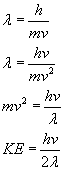
Q.7.
The radial wave function depends on
-
21%
a) Principal quantum number only
-
15%
b) Azimuthal quantum number only
-
42%
c) Both on principal and azimuthal quantum numbers
-
21%
d) Azimuthal and magnetic quantum numbers
Q.8.
the energy of an electron in an atomic orbital of hydrogen like species depends on
-
39%
a) the principal quantum number only
-
25%
b) the principal and azimuthal quantum numbers only
-
13%
c) the principal, azimuthal and magnetic quantum number
-
23%
d) the principal, azimuthal, magnetic and spin quantum number
Q.9.
Which of the following has largest de Broglie wavelength given that all have equal velocity
-
20%
a)CO2 molecule
-
22%
b) NH3 molecule
-
44%
c)Electron
-
14%
d)Proton
Q.10.
The photoelectric emission from surface starts only when the light incident upon the surface has certain minimum
-
18%
a) intensity
-
29%
b) wavelength
-
13%
c)velocity
-
40%
d)frequency
Q.11.
The element with electronic configuration [Ar]3d54s1 belongs to ( in periodic table)
-
21%
a)Group1
-
43%
b) Group6
-
18%
c)group 16
-
17%
d)Group4
Q.12.
The energy of an electron in an atomic orbital of a multi electron depends on
-
57%
a) the principal quantum number only
-
17%
b) the principal and azimuthal quantum numbers only
-
8%
c) the principal, azimuthal quantum number and magnetic quantum number only
-
18%
d)the principal, azimuthal quantum number, magnetic quantum number and spin quantum number
Q.13.
The number of protons, neutrons and electrons in 175Lu71, respectively, are .... .. [NEET 2020]
-
23%
a) 71, 71 and 104
-
28%
b) 175, 104 and 71
-
40%
c)71, 104 and 71
-
8%
d) 104, 71 and 71
Q.14.
4d, 5p, 5f and 6p orbitals are arranged in the order of decreasing energy. The correct option is ... .. [NEET 2019]
-
31%
a) 5f > 6p > 5p > 4d
-
27%
b) 6p > 5f > 5p > 4d
-
16%
c) 6p > 5f > 4d > 5p
-
25%
d) 5f > 6p > 4d > 5p
Q.15.
Which of the following series of transitions in the spectrum of hydrogen atom fall in visible region?
-
25%
a) Lyman series
-
59%
b) Balmer series
-
11%
c) Paschen series
-
5%
d) Brackett series
Q.16.
The spectrum produced by white light is
-
39%
a) Emission spectrum
-
19%
b) Continuous spectrum
-
20%
c) Absorption spectrum
-
22%
d)Both emission and continuous spectrum
Q.17.
Which of the following is not correct according to Plank's quantum theory?
-
25%
a)Energy is emitted or absorbed discontinuously
-
33%
b) Energy of a quantum is directly proportional to its frequency
-
19%
c)A photon is also a quantum of light
-
23%
d)Energy less than quantum can also be emitted or absorbed
Q.18.
An isotone of 76Ge32 is
-
33%
a) 77Ge32
-
43%
b) 77As33
-
13%
c)77Se34
-
11%
d)81Kr36
Q.19.
Most of elements have fractional atomic masses because
-
24%
a) they have isotopes
-
41%
b) their isotopes have different masses
-
12%
c)their isotopes have non integral masses
-
22%
d)the constituent neutrons, protons and electrons combine to give fractional masses
Q.20.
Electron energy in atom is negative because
-
42%
a) electron carries negative charge
-
14%
b) energy is zero near the nucleus and decreases as the distance from the nucleus increases
-
28%
c) energy is zero at infinite distance from the nucleus and decreases as the electron comes closer to the nucleus
-
16%
d) there are inter-electronic repulsions
Q.21.
In hydrogen spectrum, the series of line appearing in ultra violet region of electromagnetic spectrum are called
-
49%
a)Lyman lines
-
32%
b) Balmer lines
-
10%
c)Pfund lines
-
10%
d)Brackett lines
Q.22.
Bohr's orbital's are called stationary because
-
17%
a) Electrons in them are stationary
-
31%
b) their orbits have fixed radii
-
17%
c)the electrons in them have fixed energy
-
35%
d)the protons remains in the nuclei and are stationary
Q.23.
The wavelength of spectral line for an electronic transition is inversely related to
-
17%
a) the number of electrons undergoing transition
-
11%
b) the nuclear charge of the atom
-
49%
c)the difference in the energy levels involved in transition
-
23%
d)the velocity of electron undergoing transition
Q.24.
The number of electrons in an atom of an element is equal to its
-
14%
a) atomic weight
-
69%
b) atomic number
-
11%
c) Equivalent weight
-
6%
d) Electron affinity
Q.25.
The value of Rydber constant is
-
18%
a)1.09678 ×107 cm-1
-
34%
b) 1.09678 ×10⁷ m-1
-
29%
c)1.09678 ×10⁻⁷ cm-1
-
18%
d)1.09678 ×10⁻⁷ m-1
Q.26.
Transition of an electron from n=3 to n=2 level results in line
-
26%
a) the infra-red spectrum
-
56%
b) in the visible spectrum
-
9%
c)in the ultraviolet spectrum
-
9%
d)in the far infrared spectrum
Q.27.
The total energy of the electron atom is
-
47%
a) Less than zero
-
16%
b) greater than zero
-
18%
c)0
-
18%
d)less or more than zero
Q.28.
Neutron is present in all atoms except
-
15%
a) He
-
68%
b) H
-
6%
c) C
-
12%
d) Ne
Q.29.
Bohr's atomic model is based upon
-
22%
a)HEisenberg's uncertainty principle
-
22%
b) de Broglie concept of dual character of matter
-
14%
c)Schrodenger wave equation
-
42%
d)Plank's quantum theory
Q.30.
Isobars have same number of
-
24%
a) protons
-
15%
b) electrons
-
24%
c)neutrons
-
38%
d)nucleons
Q.31.
Ne, Na+ and F- have same
-
9%
a) mass number
-
12%
b) number of nucleons
-
62%
c)number of electrons
-
16%
d)number of protons
Q.32.
The spectral line obtained when an electron jumps from n=6 to n=2 level in hydrogen atom belongs to the
-
43%
a) Balmer series
-
17%
b) Lyman series
-
23%
c) Paschen series
-
17%
d) Pfund series
Q.33.
Which of the following series of lines in the atomic spectrum of hydrogen atom appears in the visible region?
-
17%
a)Lyman
-
7%
b)Paschen
-
7%
c)Brackett
-
69%
d)Balmer
Q.34.
Line spectra is characteristic of
-
3%
a) molecule
-
36%
b) atoms
-
30%
c)radicals
-
30%
d)none of these
Q.35.
he total number of neutrons in dipositive zinc ion with mass number 70 is
-
34%
a) 34
-
31%
b) 40
-
25%
c)36
-
9%
d)38
Q.36.
Value of planck's constant is
-
59%
a) 6.626 ×10⁻³⁴ Js
-
24%
b) 6.023 × 10²³> Js
-
14%
c) 6.626 ×10⁻²⁷ Js
-
3%
d) 6.626 × 10⁻²⁴Js
Q.37.
Ratio of radii of second and third Bohr orbits of hydrogen atom is
-
29%
a) 2 : 3
-
19%
b) 3 : 2
-
42%
c) 4 : 9
-
10%
d) 9 : 4
Q.38.
If the uncertainty in the position of an electron is zero, the uncertainty in its momentum would be
-
31%
a)zero
-
38%
b) greater than h/4π
-
10%
c)less than h/4π
-
21%
d)infinite
Q.39.
ohr model failed of the advent of
-
13%
a)Planck's quantum theory
-
27%
b) Electromagnetic wave theory
-
37%
c)Heisenberg's uncertainty principle
-
23%
d)Photoelectric effect
Q.40.
Which of the following is false regarding Bohr's model
-
7%
a) It introduces the idea of stationary states
-
11%
b) It explains the line spectrum of hydrogen atom
-
39%
c)It gives the probability of the electron near the nucleus
-
43%
d)It predicts that the angular momentum of electron in H-atom=n(h/2π)
Q.41.
Which of the following has more electrons than neutrons
-
28%
a) Al3+
-
16%
b) C
-
48%
c)O2-
-
8%
d)F
Q.42.
The limiting line in Paschen series corresponds to
-
29%
a) n1=2 and n2=3
-
42%
b) n1=3 and n2=4
-
8%
c) n1=3 and n2=10
-
21%
d) n1=3 and n2=∞
Q.43.
The isotones of an element differ in
-
38%
a)The number of neutrons in the nucleus
-
21%
b) The charge on the nucleus
-
21%
c)The number of extra nuclear electrons
-
21%
d)both the nuclear charge and the number of extra-nuclear electrons
Q.44.
hich amongst the following transition will give Lyman series in hydrogen line spectrum
-
21%
a) K to L
-
29%
b) L to M, N etc
-
29%
c)L, M. N to K
-
21%
d)K to L, M, N
Q.45.
The equation E=hν is put forward by
-
15%
a) Einstein
-
54%
b) Planck
-
19%
c)Maxwell
-
12%
d)Schrodinger
Q.46.
When electron revolves in stationary orbits
-
43%
a) There is no change in energy level
-
13%
b) They becomes stationary
-
17%
c) They are gaining kinetic energy
-
26%
d) There is increase in energy
Q.47.
In which case the wavelength emitted is minimum
-
38%
a)An electron jumps from 2nd to 1st level
-
21%
b) An electron jumps from 3rd to 2nd level
-
4%
c)An electron jumps from 4th to 3rd level
-
38%
d)An electron jumps from 5th to 4th level
Q.48.
The spectrum produced from an element is
-
24%
a) Atomic spectrum
-
28%
b) Line spectrum
-
12%
c)Absorption spectrum
-
36%
d)any one of the above
Q.49.
Which of the following is not a unit of frequency
-
9%
a) sec-1
-
6%
b) Hertz
-
41%
c)Cycles sec-1
-
44%
d)k Hz sec-1
Q.50.
Which property of the element is whole number
-
30%
a) Atomic mass
-
30%
b) Mass number
-
22%
c) Atomic size
-
18%
d) Ionization potential