Q.1.
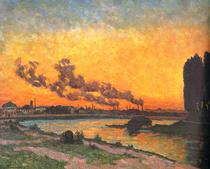
, a suburb of Paris, was painted in 1873 by Armand Guillaumin. Despite taking part in six of the eight Impressionist exhibitions Guillaumin enjoyed little success and had to carry on with his day job. He was finally able to quit his job and concentrate on his art in 1891 after what event?
-
0%
After he reached retirement age
-
0%
After he inherited his father's wealth
-
0%
After he won the lottery
-
0%
After he married a duchess
Q.2.
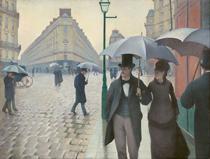
This 1877 painting of a city street on a rainy day is considered to be Gustave Caillebotte's masterpiece, but which city does it show?
-
0%
Amsterdam
-
0%
Paris
-
0%
London
-
0%
New York
Q.3.
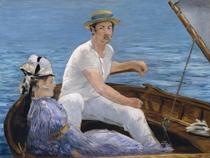
This 1874 work, , was painted at Argentuille where the Seine River flows north out of Paris. Who was the artist who painted it?
-
0%
Édouard Manet
-
0%
Vincent van Gogh
-
0%
Claude Monet
-
0%
Toulouse-Lautrec
Q.4.
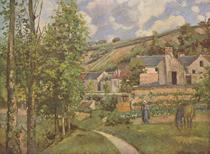
is one of the few Impressionist paintings by Camille Pissarro to survive. He fled France for Britain after the outbreak of the Franco-Prussian War. When he returned he found that soldiers had used his paintings as what?
-
0%
As Frisbees
-
0%
As blankets
-
0%
As fuel for fires
-
0%
As floor mats
Q.5.
This 1885 painting of cliffs by Claude Monet was painted in which small town, a place which the artist used as inspiration for over 50 of his paintings?
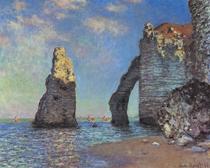
-
0%
Étretat
-
0%
Lyme Regis
-
0%
Auderville
-
0%
Saint Helier
Q.6.
This 1873 painting by French Impressionist Edgar Degas is of a cotton office in which North American city?
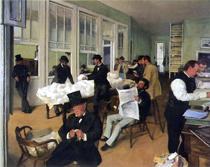
-
0%
Detroit
-
0%
Quebec
-
0%
New Orleans
-
0%
Baton Rouge
Q.7.
was painted in 1893 by Mary Cassatt, the only artist from which country to exhibit her work alongside the French Impressionists?
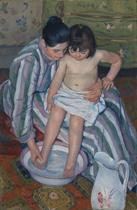
-
0%
The United Kingdom
-
0%
Australia
-
0%
The United States
-
0%
Canada
Q.8.
was painted by the British Impressionist Alfred Sisley. How many oil paintings did Sisley produce in his lifetime?
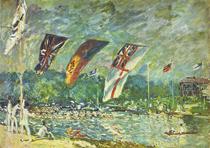
-
0%
Between 20 - 30
-
0%
Between 80 - 90
-
0%
Between 200 - 300
-
0%
Between 800 - 900
Q.9.
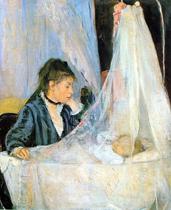
was painted by Berthe Morisot, one of three women (the others being Marie Bracquemond and Mary Cassatt) who were collectively known as what?
-
0%
Les trois artistes féminines (the three feminine artists)
-
0%
Les trois grands-tantes (the three great-aunts)
-
0%
Les trois porteurs de pinceau (the three brush bearers)
-
0%
Les trois grandes dames (the three leading ladies)
Q.10.
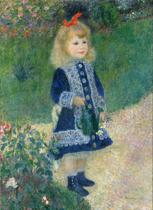
This 1876 painting is by which French Impressionist?
-
0%
Laura Muntz Lyall
-
0%
Pierre-Auguste Renoir
-
0%
Joaquín Sorolla
-
0%
Edgar Degas